Chengde in a day: palace rooms, the lake gardens and a separate temple visit
Chengde rewards a day organized around three different experiences: the formal palace area, a slower walk through the lake gardens, and, if time permits, one outlying temple. Begin at the Mountain Resort rather than trying to collect every temple. This guide gives you a named sequence, practical decision points and three real photographs of the places involved.
Understand the two places on your map
The Mountain Resort, Bishu Shanzhuang (避暑山庄), is in Chengde, Hebei. UNESCO dates its Qing construction to 1703–1792 and explains that it combined summer residence, government business, gardens and ceremonial functions. It was more than a place to escape heat. The important relationship for a visitor is between a formal courtly setting and a deliberately varied landscape of water, wooded hills and open ground. Keep that larger purpose in mind when a building looks surprisingly restrained beside a more ornate temple.
Putuo Zongcheng Temple (普陀宗乘之庙), the optional extension here, lies outside the resort. It belongs to the wider heritage ensemble but is a separate destination, with its own approach and admission arrangements. Put two pins on your map and arrange a real transfer between them. Do not assume that a name containing Mountain Resort and Outlying Temples means one pedestrian circuit or one universal ticket. If you only have a partial day, the palace and lake sequence is the coherent first choice.
References: 1
Before buying: distinguish the resort, palace area and temple product
The operator's published ticket notice, checked on 20 October 2026, lists a regular full-price Mountain Resort ticket at CNY 130 for April–October and CNY 90 for November–March, including the palace area. Its Budala–Xinggong product lists CNY 80 and CNY 60 respectively and names Putuo Zongcheng and Xumi Fushou temples. These are the published adult-price categories, not a quote for every visitor, concession or booking channel. Read the exact product and date before paying, especially if a reseller offers a similarly named package.
The same formal notice gives a seasonal October 10–March 31 schedule of 08:00–17:30 for the resort and 08:30–17:00 for the surrounding temples, with ticket sales and entry stopping an hour before closing. The operator explicitly allows special adjustments. Save its current notice and reconfirm the day’s palace access, permitted exits and any transport service you intend to use. Published gate arrangements have changed during 2026; a remembered exit from an older guide should not determine where your driver waits.
First stop: Lizheng Gate and the formal palace sequence
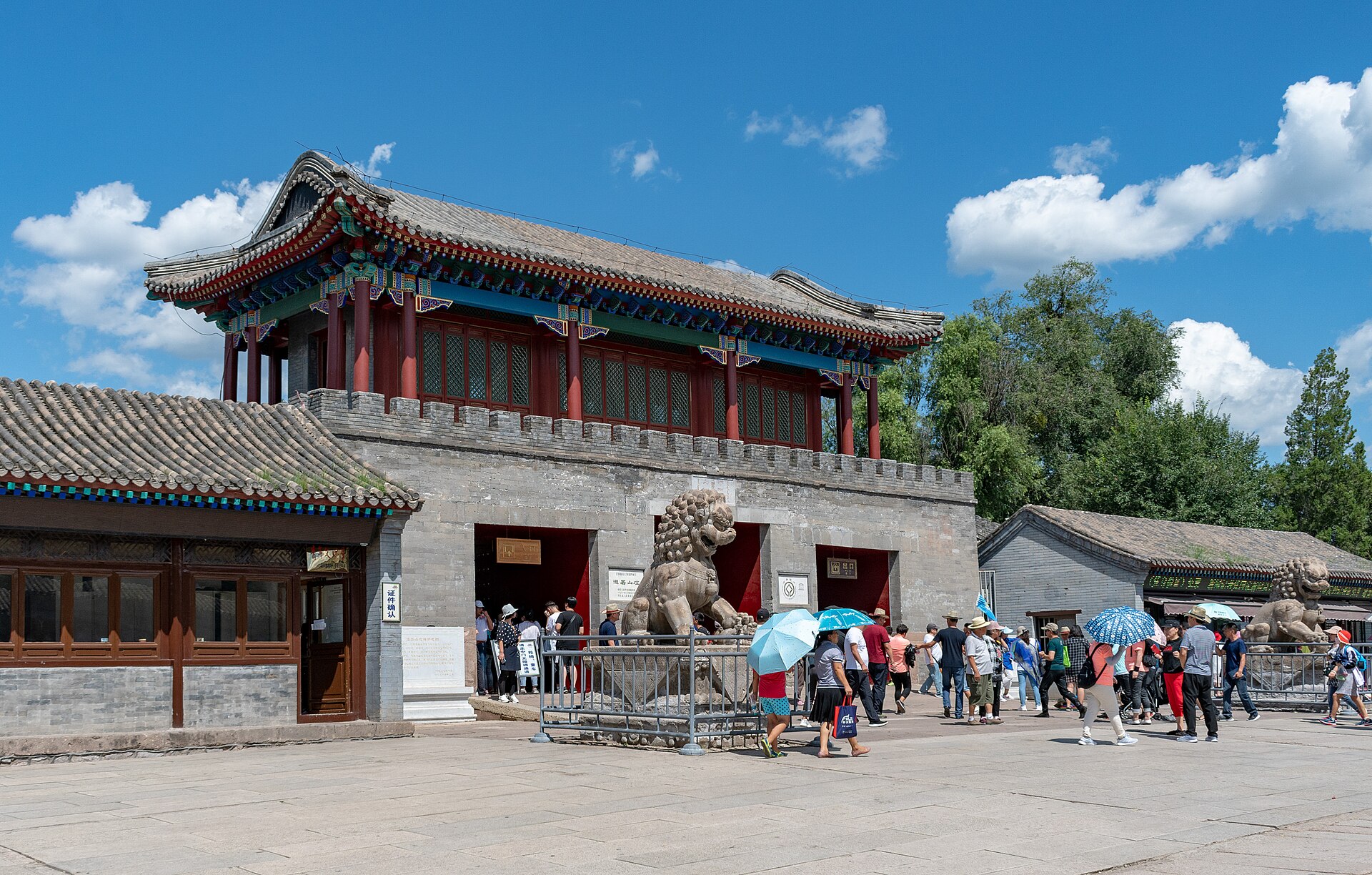
Use Lizheng Gate (丽正门) as the organizing point if it is the confirmed visitor entrance for your day. The operator's named routes begin there, then identify Danbo Jingcheng (澹泊敬诚), Sizhi Shuwu (四知书屋), Yanbo Zhishuang (烟波致爽) and the transition toward the garden. Follow the actual museum route rather than treating this list as permission to enter every hall. At the entrance board, identify which spaces are exhibitions, which are visible only from outside and how the route reaches the lake side.
Give Danbo Jingcheng more than a doorway photograph. The operator identifies it with major ceremonies and audiences. Look at how the approach frames the hall, how the roof and column line define its scale, and what the interpretation actually says about its use. Then choose one interior or threshold detail elsewhere along the permitted route. Comparing a ceremonial approach with a smaller room or passage makes the palace understandable as a sequence of functions, rather than a row of old buildings whose names blur together.
Second stop: let the lake gardens change the pace
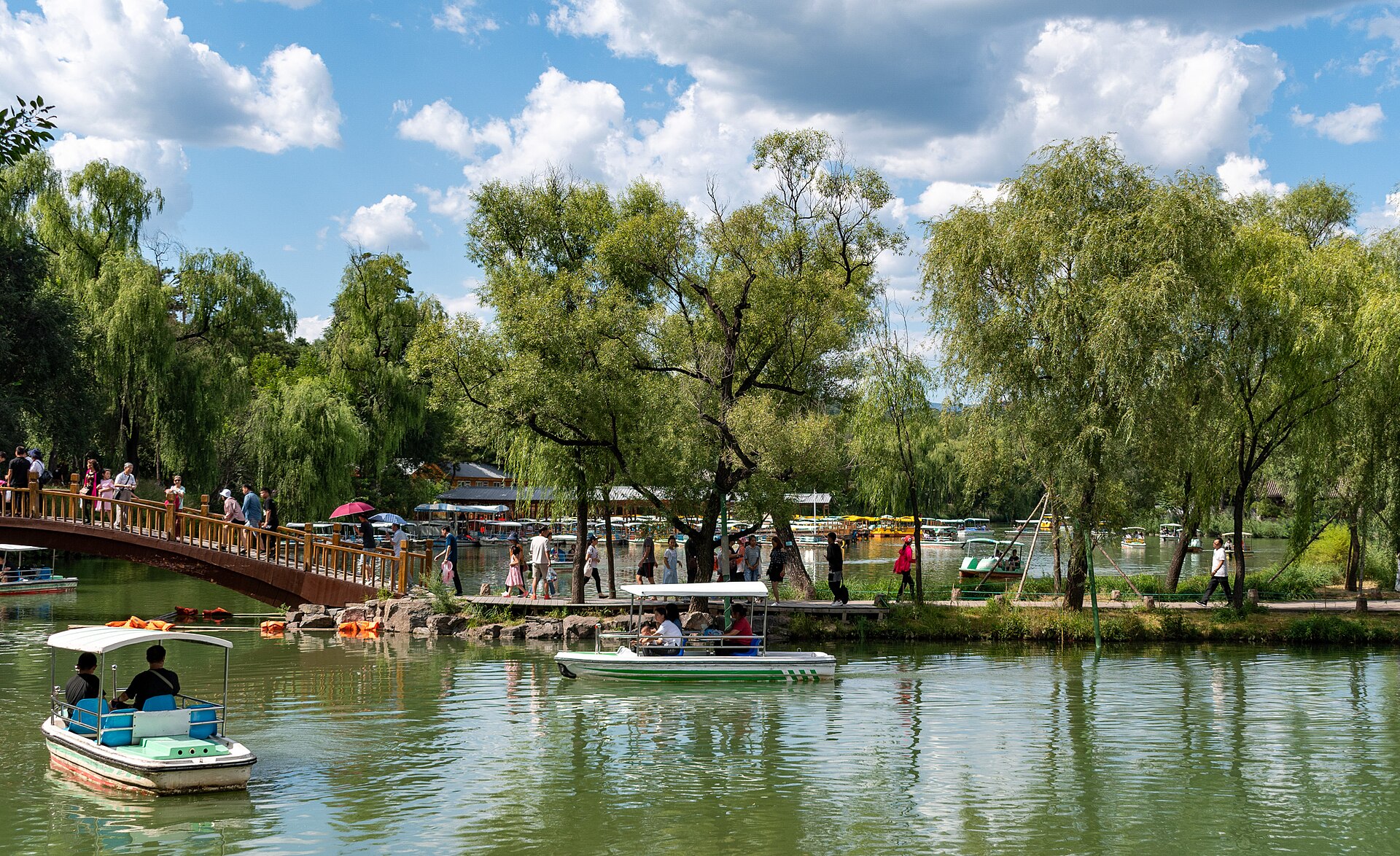
After the palace sequence, use the operator's map to locate the lake area and Ruyi Zhou (如意洲). The published route names these after the palace and garden transition; Ruyi Zhou is also interpreted as an early residential and governing area within the resort. Choose a manageable lake-side section and one destination across or beside the water instead of announcing a complete circuit. First look back toward the built edge, then across the water: the change from enclosed approach to broader view is the central experience of this visit.
At a permitted stopping place, compare three layers: a near tree or balustrade, a pavilion or island edge, and the ground beyond. Move on when the view becomes repetitive, and pause where a bridge or change of direction rearranges those layers. The accompanying lake photograph records an actual 2018 scene, including visitors and boats; it is not evidence that those services operate today. A boat ride is optional and should be checked as a separate service. You do not need one to make sense of the garden composition.
Choose a stopping point instead of adding the mountain circuit automatically
Before the lake walk extends into another part of the resort, decide what still interests you. If you want more garden architecture, identify one named place on the current map, such as Yanyu Lou (烟雨楼), and check the route from your actual position. If the palace and water comparison already feels complete, plan the permitted exit and a proper break. A page containing many named scenes is an orientation resource, not a demand to link them all before lunch.
Do not add a vehicle circuit merely because the grounds are large. Ask what it covers, where it starts and ends, and whether it is running in the current season before building it into your day. The resort's older route recommendations include services and prices that should not be copied as live offers. The same applies to a boat, an evening program or a different gate. Your core visit remains the palace-to-lake sequence; additional transport should solve a clear need, not create an obligation to cover the map.
References: 4
Optional afternoon: Putuo Zongcheng and the Great Red Terrace
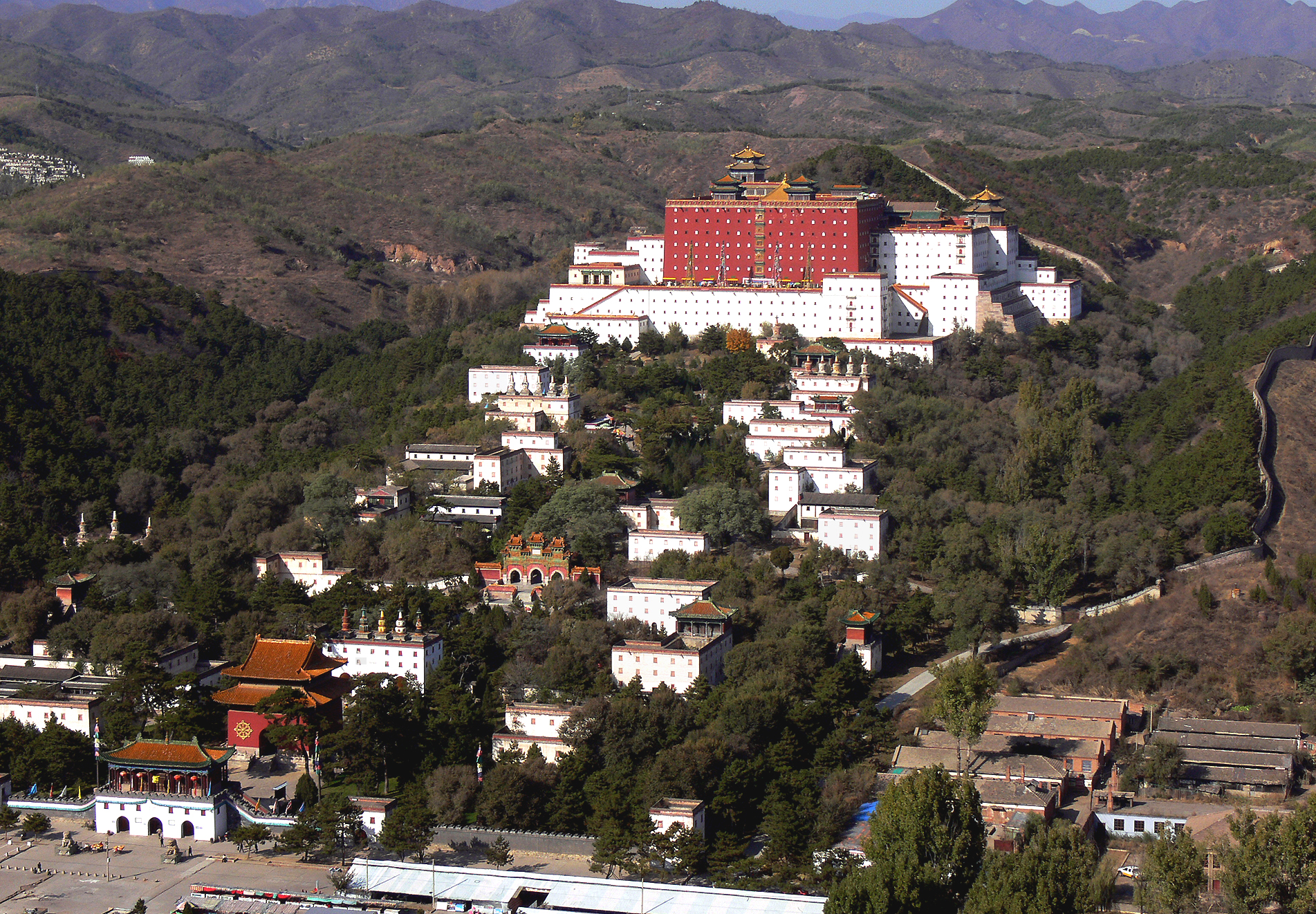
Add Putuo Zongcheng only after allowing for a break, the actual transfer and the temple's admission cutoff. The operator explains its reference to Lhasa's Potala Palace and identifies a sequence including the entrance, stele pavilion, Five-Pagoda Gate, glazed archway and Great Red Terrace, Dahongtai (大红台). The panorama supplied here is of this exact Chengde temple, not the Potala Palace in Tibet. That distinction matters when comparing the forms: the photograph shows the temple's broad hillside composition, rather than a promise of a currently accessible panoramic viewpoint.
Read the lower approach first, then consider the larger red-and-white mass above it from the visitor route. Ask which parts can actually be entered and what the current path involves before committing to every upper space. At a comfortable authorized position, compare the repeated openings and stepped volumes with the lower palace architecture you saw in the morning. Keep the comparison concrete: arrangement, scale, approach and setting. You do not have to enter every hall or reproduce the photographer's elevated position to understand why this is a distinct second visit.
References: 7
Make the plan fit the actual group and season
For a shorter or less mobile visit, prioritize the palace interpretation and an agreed lake-side section, asking the operator about the exact surfaces, steps, assistance and return arrangement. A garden photograph does not establish a step-free route. For a family or mixed-interest group, choose a shared palace stop and a lake pause before deciding together about a temple. A tired companion should not discover that the last optional attraction is also the place where the return transport has been booked.
Keep the Chinese names above available offline beside your map pins and accommodation details. Establish where you will pause for food or a drink rather than assuming the next historic building contains a suitable service. In colder or unsettled weather, shorten the exposed part of the plan and use the actual operator's conditions; do not substitute a closed route with an improvised hillside shortcut. A good Chengde day ends with a clear relationship between court, garden and temple, even when only the first two were practical.
An illustrative pace for one day
Allow roughly two hours for arrival and the selected palace route, then a separate block for the lake gardens and a substantial break. These are editorial planning allowances, not measured walking times or guaranteed queue estimates. At the break, decide whether a confirmed transfer and temple cutoff leave a comfortable second visit. If they do not, finish the resort properly. The optional temple should be removed before the break, food or return arrangement is squeezed out.
Questions
Is Putuo Zongcheng the Potala Palace?
No. It is a temple in Chengde whose design refers to the Potala Palace in Lhasa. The included panorama depicts the Chengde site, and the guide treats it as a separate excursion from the Mountain Resort.
Can I use this plan with only half a day?
Keep the selected palace sequence and a manageable lake section, with the exit confirmed. Omit the outlying temple and any mountain or boat circuit. The plan is strongest when its two main experiences receive attention rather than becoming checkpoints before a rushed transfer.
Sources and photography
- UNESCO: Mountain Resort and its Outlying Temples, Chengde
- Chengde operator: ticket prices, seasonal opening and admission notice
- Chengde operator: 2026 opening-time adjustment notice
- Chengde operator: named route map
- Chengde operator: Danbo Jingcheng
- Chengde operator: Ruyi Zhou
- Chengde operator: Putuo Zongcheng guide map
Photographs are credited beside each image. Their recorded capture dates describe the images; check the current visitor or product information linked above when planning.