Wudang’s palace route: Taizipo, Zixiao and Nanyan without rushing the summit
Plan a day around three distinctive architectural encounters: Taizipo’s curving approach, Zixiao’s elevated courts and Nanyan’s cliffside setting. Exact-place photographs and named stops show how buildings meet mountain ground, while the transport plan keeps a Golden Summit excursion a separate, deliberate choice.
Choose the architecture route before choosing a summit ticket
Wudang's Daoist palaces occupy different settings in the mountains of Hubei. UNESCO emphasizes both the religious building tradition and its relationship with peaks, valleys and slopes. This day concentrates on Taizipo (太子坡), Zixiao Palace (紫霄宫) and Nanyan Palace (南岩宫). Their approaches offer three different ways to understand architecture on mountain ground. The sequence follows the same broad order shown in the destination's published route, but deliberately leaves the Golden Summit out of the core day.
Choose this version if you want to spend useful time in courts, beside platforms and at an interpreted cliffside complex. If the Golden Summit is your main reason to come, organize a separate summit-focused day with its actual transport, cableway and walking requirements. Trying to add it only after reaching Nanyan is a poor way to make that decision. A place's higher elevation does not make it a substitute for the buildings you passed earlier, and cableway travel does not eliminate every step or queue.
Understand what each transport and admission product covers
At the visitor centre, explain the named three-stop plan and obtain the current bus-route information. Ask how to reach Taizipo, continue to Zixiao and reach the Nanyan approach, then confirm the return service and final boarding time. Keep the Chinese names beside the current map. A bus drop-off named for a palace may still require walking to the actual buildings; ask about the distance, steps and expected conditions rather than assuming the ticket checkpoint stands beside the bus door.
Admission, scenic buses, cableway travel and particular precincts can be presented as separate items or bundled products. Read the exact inclusions before buying. The tourism company's published price page and the destination's dated 2026 route page do not present identical figures, so this guide avoids reproducing one as a guaranteed checkout total. Confirm the current product with the responsible service, including any reservation requirement and closures. You do not need a cableway product merely because a general Wudang package includes one when this selected route is the purpose of the day.
Taizipo: follow the turning wall into the sloping complex
Taizipo is also called Fuzhen Guan (复真观). The destination's architectural account identifies its curving passage wall, commonly called the Nine-Bend Yellow River Wall (九曲黄河墙), and the raised setting of the Prince's Hall (太子殿). Start at the permitted entrance and experience the turn of the passage before looking for a higher viewpoint. Notice what the wall reveals and conceals, and how the next court differs from the approach. The point is the sequence of spaces, not a compulsory photograph beside a particular inscription.
Continue only along the open visitor route. Where a labelled construction detail is presented, use it to connect the building with the support beneath it. The famous ‘one column, twelve beams’ description is a useful question for an interpreter, not an invitation to enter a restricted room to count members yourself. Ask which visible feature the name refers to. Take the time to understand one relationship, then leave enough of the morning for Zixiao. Taizipo works best as the opening comparison, rather than the first place to spend every available minute.
References: 4
Zixiao: let the courts lead you to the main hall
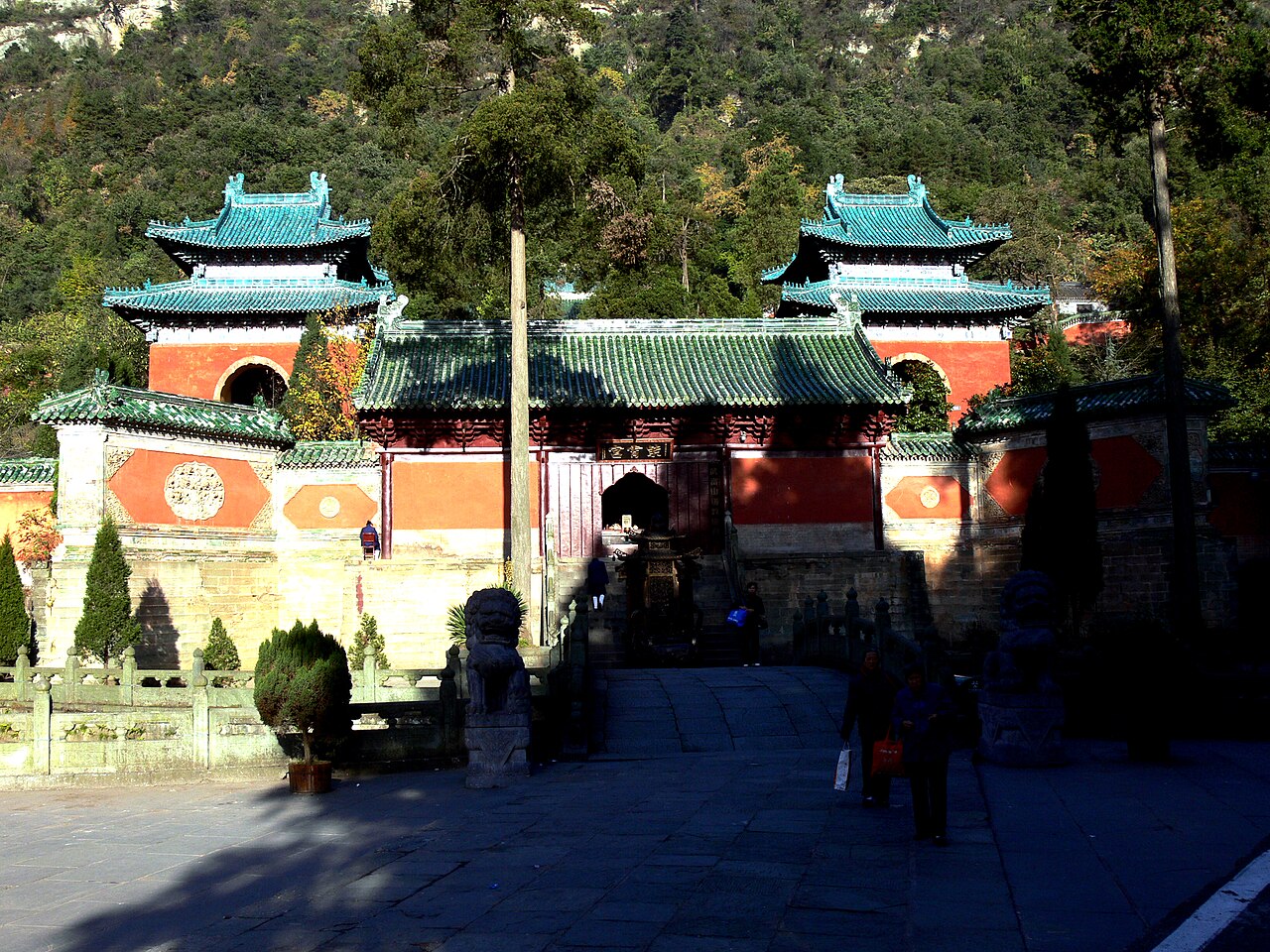
At Zixiao Palace, locate the actual entrance and the current open sequence. The supplied November 2009 entrance photograph shows the named palace, green-tiled roofs and a rising wooded setting. Move through at an ordinary pace first, then stop where the court offers a clear view of the next architectural level. A succession of walls, gates and platforms makes the ascent part of the experience. Looking straight at a roof from close underneath it can hide the larger arrangement that brought you there.
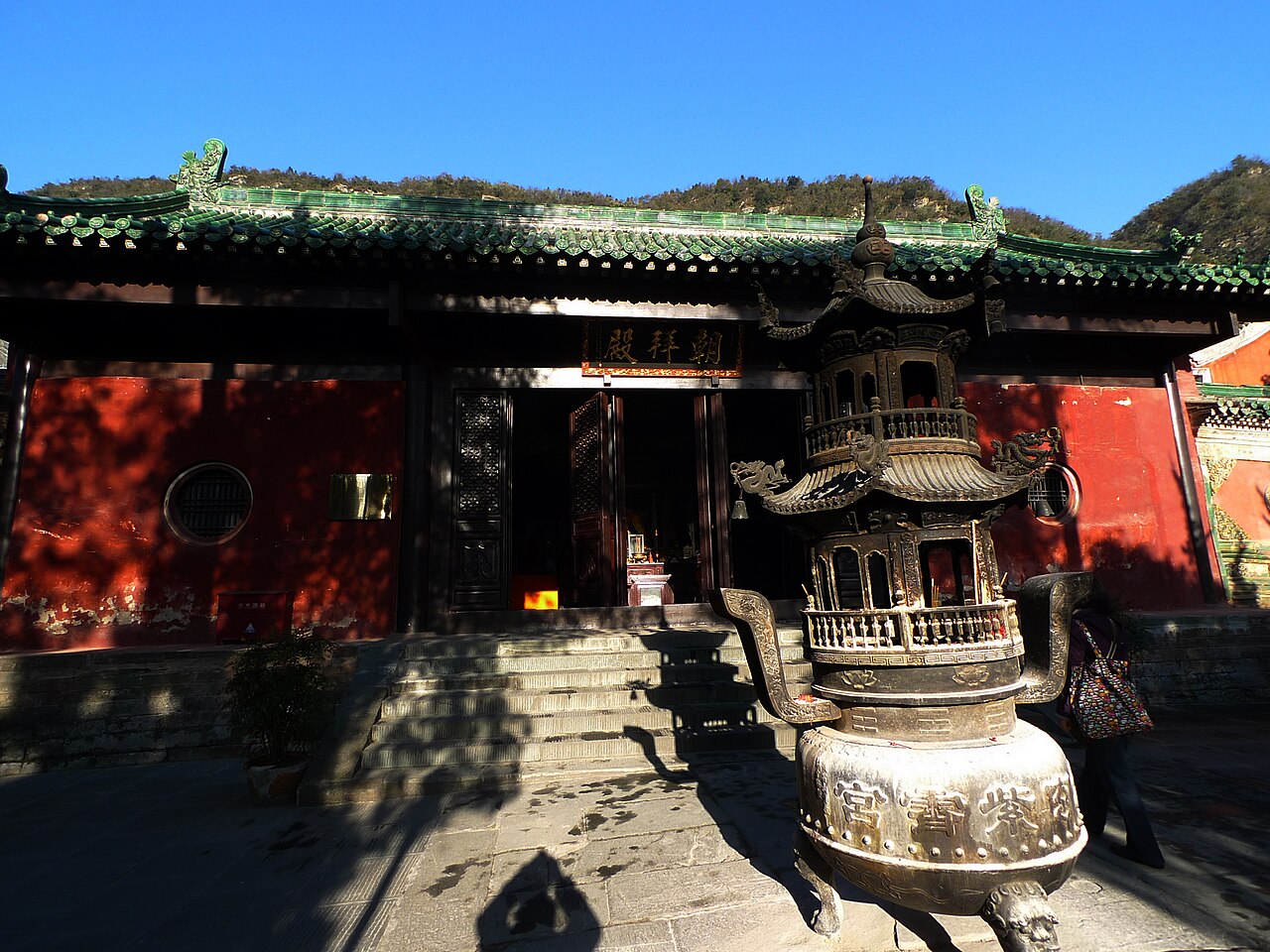
The destination's description places Zixiao's main timber hall on three elevated platforms. Use the permitted approach to see the contrast between the supporting terraces and the hall above, then look at the depth beneath its eaves. The separate photograph of the Worship Hall, Chaobai Dian (朝拜殿), is deliberately identified as that building rather than labelled as the main hall. The visible nameboard and bronze incense vessel make it a concrete stop. Read the current signs before assigning a function to another building that happens to share the same red-and-green palette.
Treat the active palace as a place of worship
Choose one hall or interpreted object that is open and spend time understanding it. If a ceremony or devotional activity is taking place, let it determine where you stand. Leave entrances passable, ask before photographing people closely and follow the actual restrictions on indoor photography. A visitor can appreciate the architectural hierarchy without touching ritual objects, moving an offering or imitating a practice for a photograph. Use the current identification of an image or object rather than guessing from its position.
Take a break before continuing toward Nanyan. Ask where food and toilets are available on the actual route and allow the group time to sit. Carry drinking water, weather-appropriate clothing and footwear suitable for stone steps. The photographs illustrate particular architecture in autumn 2009; they do not promise today's weather, tree cover, surface condition or crowd level. A clearer current view of one court is more useful than trying to reproduce an old camera position that is now blocked or inappropriate.
Nanyan: pay attention to the cliffside relationship
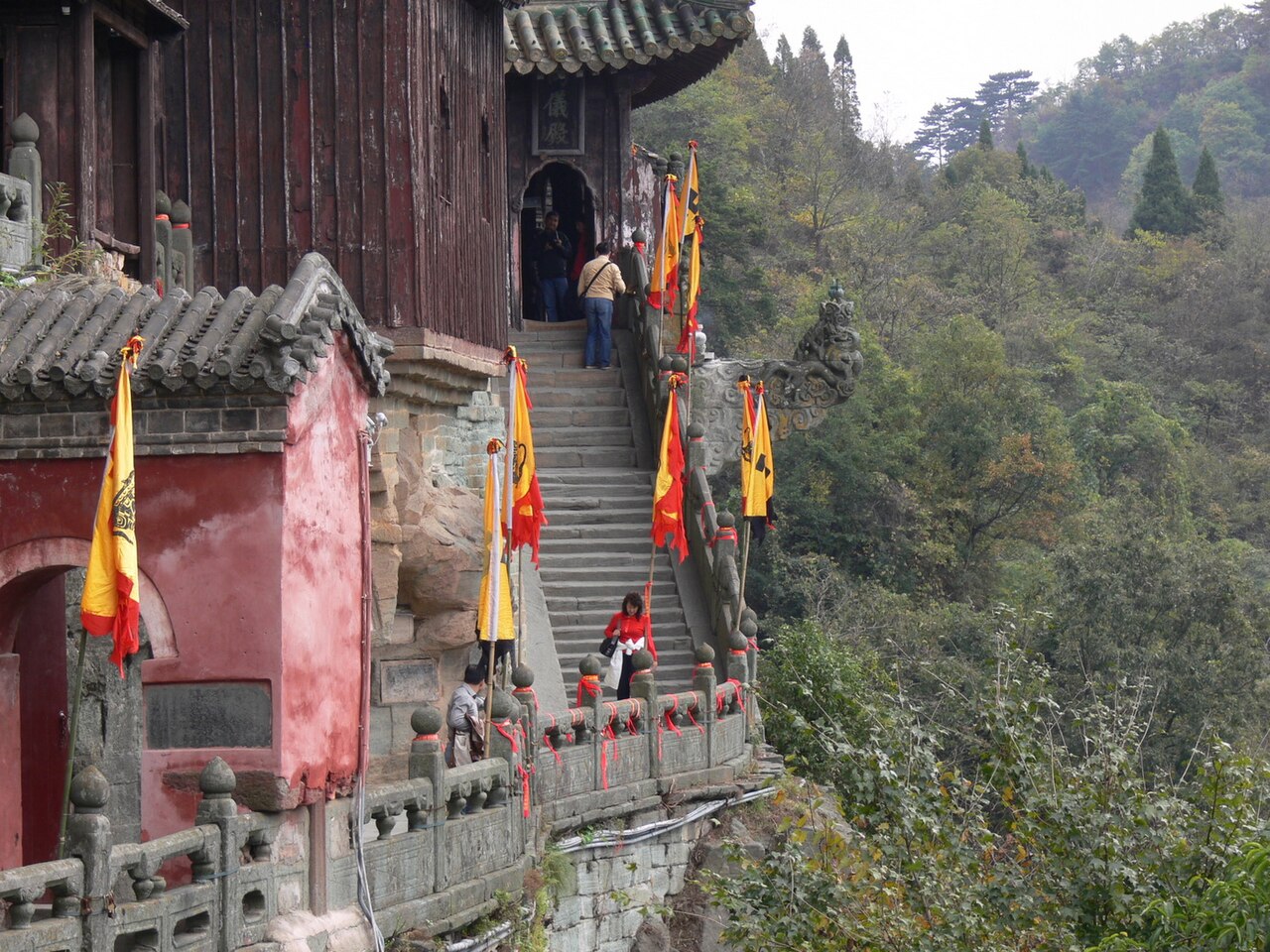
At Nanyan, confirm which parts of the palace and approach are open before walking from the transport stop. The destination's architectural introduction describes buildings fitted to the terrain and a less uniformly symmetrical arrangement than a simple axial court sequence. The actual November 2009 photograph shows the stair and building relationship beside the Two Principles Hall, Liangyi Dian (两仪殿), with a wooded drop beyond. It helps explain why this part of the day feels different from a broad court at Zixiao.
Stay inside the permitted route and use a clear stopping place to look back at how stone, railing, stairs and building meet. Where current interpretation identifies the stone hall or Dragon-Head Incense feature, view it from the authorized area. An image of a projecting feature does not make it a visitor walkway. Do not cross a barrier or lean out to improve the composition. If visibility is poor or sections are closed, retain a shorter architectural visit; the cliffside setting remains meaningful without a dramatic edge photograph.
Make the summit a conscious second plan
Finish the selected Nanyan visit while the confirmed return arrangement is still comfortable. If you want the Golden Summit as well, give it a separately planned day or replace the earlier architecture stops with a verified summit route from the outset. Ask the relevant operator about the current cableway, bus connections, remaining walking, last descent and weather-related suspension. A descent can also take time and effort; a suggested online itinerary is not evidence that your group can complete it before the final service.
For a shorter day, retain Taizipo and Zixiao, or choose Zixiao and the accessible portion of Nanyan once conditions are known. Ask specifically about gradients, steps and available assistance if these matter. The same conservative structure helps with rain or unexpectedly long entry procedures: remove a component rather than speeding through slippery ground. Leave with a clear comparison of a turning passage, elevated palace courts and a building fitted beside rock. That is a substantial Wudang visit in its own right.
Protect time at the palaces
Use flexible editorial allowances of around an hour at Taizipo, 90 minutes at Zixiao and up to two hours for the chosen Nanyan approach and open areas. Add the actual bus journeys, meals and entry margins. These are planning blocks, not walking or queue guarantees. If the day starts late, remove one palace; do not preserve all three by taking chances with the last return service.
Questions
Do I need the cableway for this selected palace route?
This itinerary does not require a Golden Summit journey. Check the current transport map and named admission inclusions for the palaces you choose, and buy a cableway product only if your separately planned route actually uses it.
Does bus access make the sites step-free?
No such assumption is justified. Ask about the actual approach, thresholds, stairs and assistance at each stop. The photographs show substantial changes of level, and a scenic bus serves a transport stop rather than every building interior.
Sources and photography
- UNESCO: Ancient Building Complex in the Wudang Mountains
- China Wudang: published one-day route, June 2026
- Hubei Wudangshan Tourism Company: ticket information
- China Wudang: Fuzhen Guan/Taizipo
- China Wudang: Zixiao Palace
- Gisling: Zixiao Palace
- Gisling: Zixiao Worship Hall
- China Wudang: Nanyan
- Gisling: Nanyan Palace
Photographs are credited beside each image. Their recorded capture dates describe the images; check the current visitor or product information linked above when planning.