Mount Wutai for architecture: Taihuai’s White Pagoda and a separate Foguang Temple visit
Follow a focused Taihuai temple walk from Tayuan to Xiantong, then decide whether Foguang’s Tang-period East Main Hall deserves a separate day. Exact-place photographs show Tayuan’s White Pagoda, Foguang’s raised approach and the hall’s timber brackets, helping you plan a visit around real buildings rather than an undifferentiated mountain checklist.
Give Taihuai and Foguang different days or different priorities
Mount Wutai (五台山) is a Buddhist cultural landscape in Shanxi, with temples built and rebuilt over a long period. Its five terrace-like peaks give the mountain its name, but reaching a peak is not a condition for understanding the temples. This guide concentrates on two rewarding architectural experiences: the Taihuai (台怀) temple cluster, anchored by Tayuan and Xiantong, and a separately arranged visit to Foguang Temple (佛光寺). The latter is a distinct part of the heritage property, not a hall hidden behind the White Pagoda.
With a single day based in Taihuai, give the central temples your attention and omit Foguang unless your transport and access have been specifically arranged around it. With a second day, make Foguang a deliberate architecture visit instead of a hurried detour on the way to a train. If your principal interest is Tang timber construction, reverse the priority and organize Foguang first. The best choice depends on the places you actually want to see, rather than how many temple names can fit beside the word Wutai.
Confirm the right arrival point before booking the rest
Ask an accommodation or transport provider to show its exact position relative to Taihuai and the scenic-area entrance arrangements. A property advertised with the mountain's name may not be within easy walking distance of your intended temple. If travelling onward to Foguang, save 佛光寺 and the full confirmed pickup location separately. Do not buy a journey to a similarly named modern temple elsewhere. Keep the final return leg explicit: a driver waiting at an agreed meeting point is different from hoping to arrange a ride after the visit.
Before departure, confirm the responsible visitor service's current admission, any reservation procedure, vehicle access, individual temple entry and closure notices. This research establishes the named heritage places and architectural context, but not a complete live 2026 operating calendar or price list. Therefore the guide does not promise that a mountain admission product covers every interior or transport service. For Foguang, ask specifically whether the East Main Hall viewing area is accessible and what can be seen under current conservation arrangements. A general statement that the temple is open may leave that central question unanswered.
Start at Tayuan and let the White Pagoda orient the walk
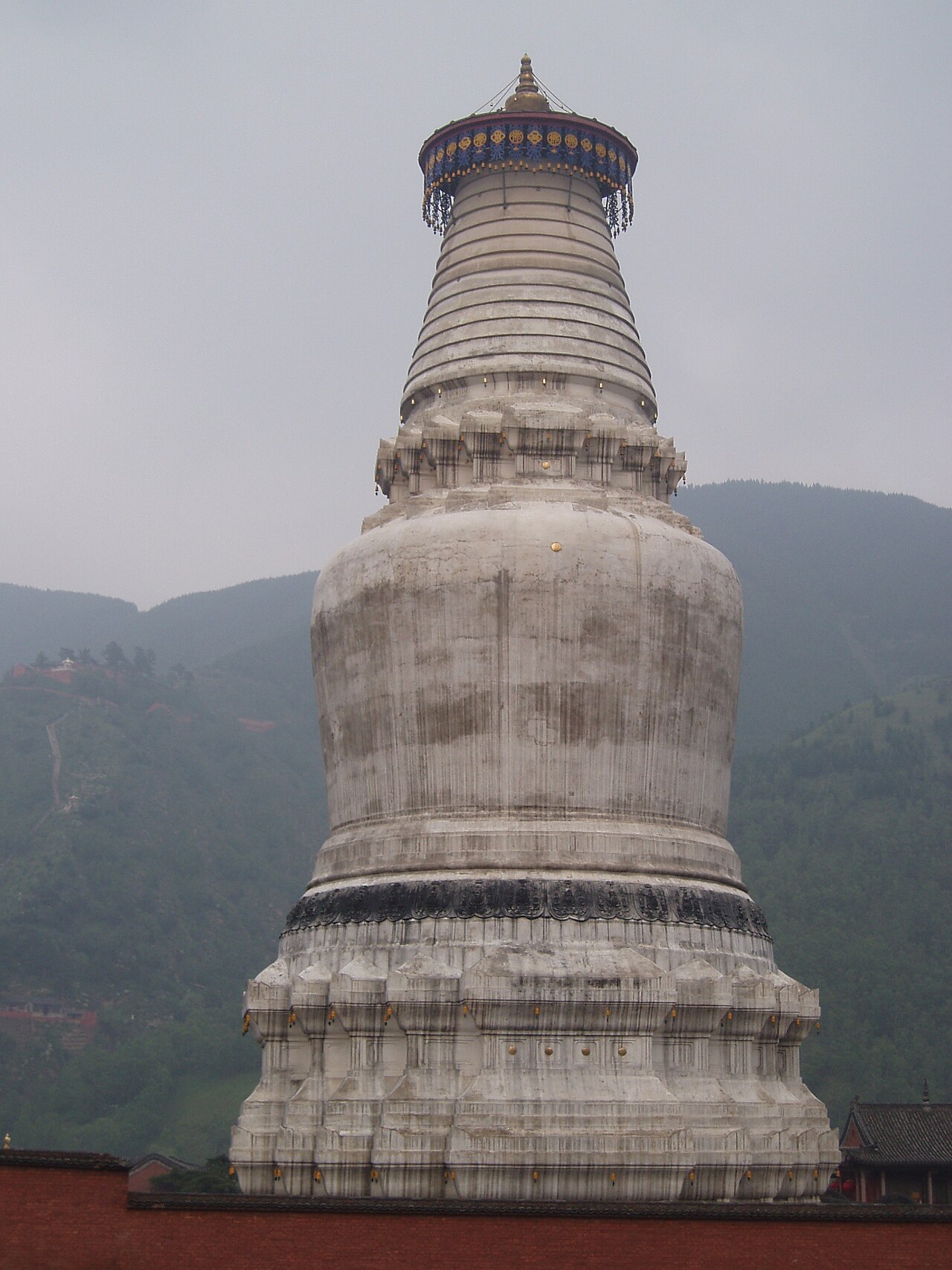
Tayuan Temple, Tayuan Si (塔院寺), is the first anchor for the Taihuai walk. The Hong Kong Antiquities Advisory Board's original study-tour report places it south of Xiantong. Locate the actual visitor entrance on the current map, then approach the White Pagoda from a permitted public position. The real 2008 photograph shows its broad white body, layered upper profile and mountain setting. This is the pagoda at Tayuan, not a generic Tibetan-style monument borrowed from another destination.
Take a broad look before moving closer. See how the pagoda stands above the temple roofs and then how its apparent proportions change from inside the permitted precinct. Follow the site's circulation and photography instructions, leaving space for worship and movement. You need not circle an object simply because another visitor does; observe religious practice respectfully without turning it into a performance for the camera. If the pagoda area is restricted, use a permitted exterior view and choose an open interpreted temple rather than trying to find an unofficial way around the closure.
Continue to Xiantong for a different architectural experience
Move to Xiantong Temple, Xiantong Si (显通寺), using its identified entrance rather than assuming the Tayuan ticket checkpoint leads through to it. The study-tour report describes Xiantong north of the White Pagoda and identifies several halls along its main axis, including Wuliang Hall and the Bronze Hall. At the entrance, ask which of these spaces are currently open. Choose a modest sequence that lets you understand successive courts and one well-interpreted building instead of passing every name at the same pace.
Look first at how a hall is approached: the preceding court, a raised threshold or platform, the depth beneath the eaves and the space you are permitted to enter. Then use a label to connect the building's name with its material or history. A hall described as bronze presents a different question from a timber structure, while a repainted surface does not by itself tell you the age of the building beneath it. When a feature is unfamiliar, ask about that feature directly rather than assigning one dynasty to the whole temple.
References: 2
Make one optional Taihuai extension, then stop for a meal
If the core visits leave time and energy, consider the separately identified Pusading (菩萨顶) or Shuxiang Temple (殊像寺), after checking access and the route. Pusading occupies a higher setting above the central cluster, while UNESCO singles out Shuxiang for its complex sculptural setting. These offer different reasons to continue. Choose the former for a further relationship between temple and slope, or the latter for an interpreted sculpture visit. Neither is an obligation to finish the day with an increasingly tired list of religious interiors.
Plan a seated break and a meal before deciding on the extension. Confirm food arrangements directly, including ingredients if they matter to your group; a temple setting does not establish the preparation of every nearby dish. If someone has difficulty with steps or thresholds, ask about the actual alternative route before splitting the group. Keep the day centered on the temples you have chosen. High-peak travel, mountain walking and any specialist pilgrimage route need their own current permissions, transport and weather planning, and are outside this architectural itinerary.
At Foguang, understand the raised East Main Hall before the details
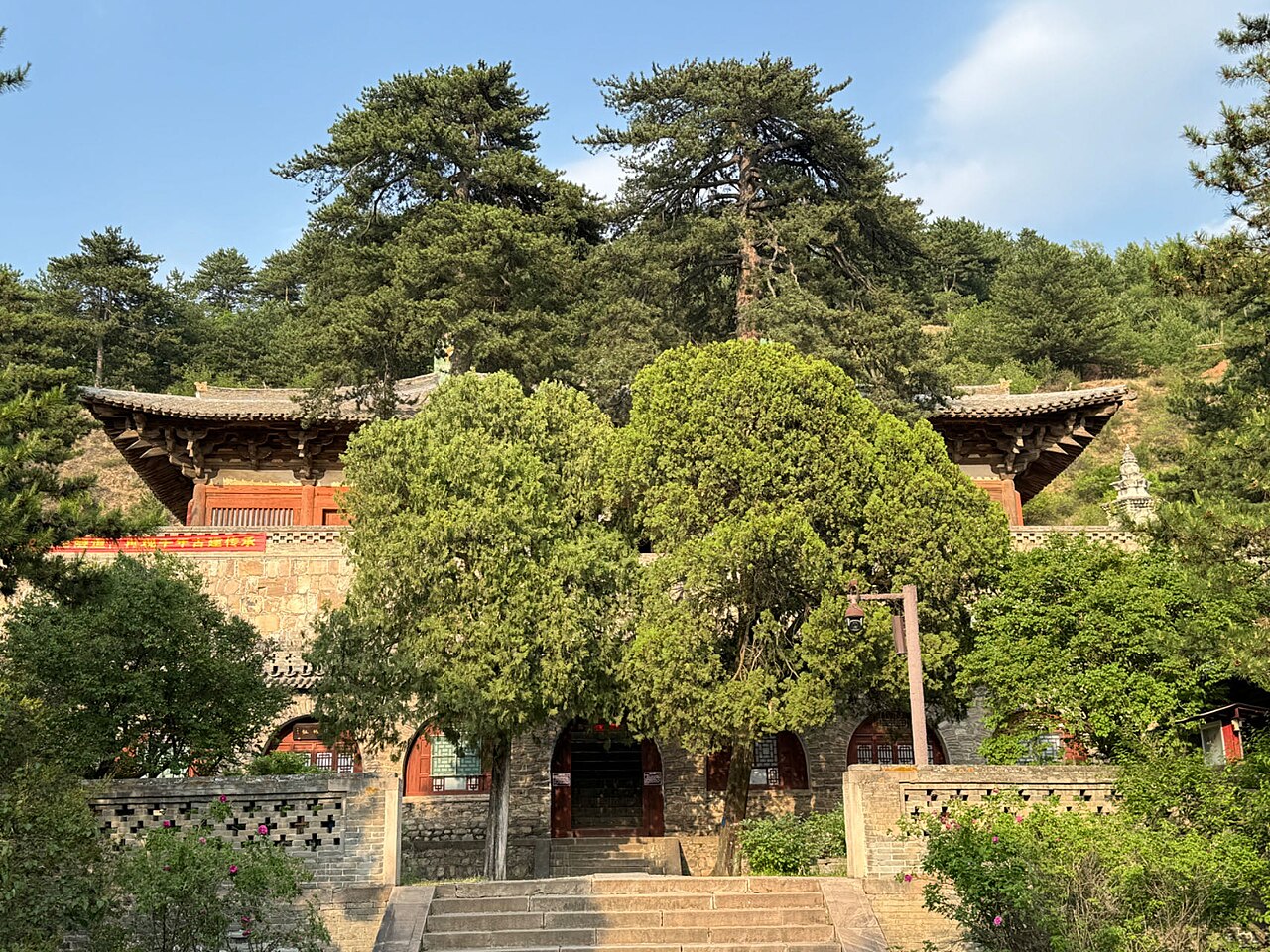
On the separately arranged Foguang visit, orient yourself from the permitted lower approach before climbing any open stairway. The East Main Hall, Dong Dadian (东大殿), stands high in the temple's eastern part. The supplied May 2024 photograph shows the hall above the stone-faced terrace with trees partly screening its frontage. That relationship is the first useful thing to understand: the building is encountered through changes of level and view, not as an isolated roof floating against a blank sky.
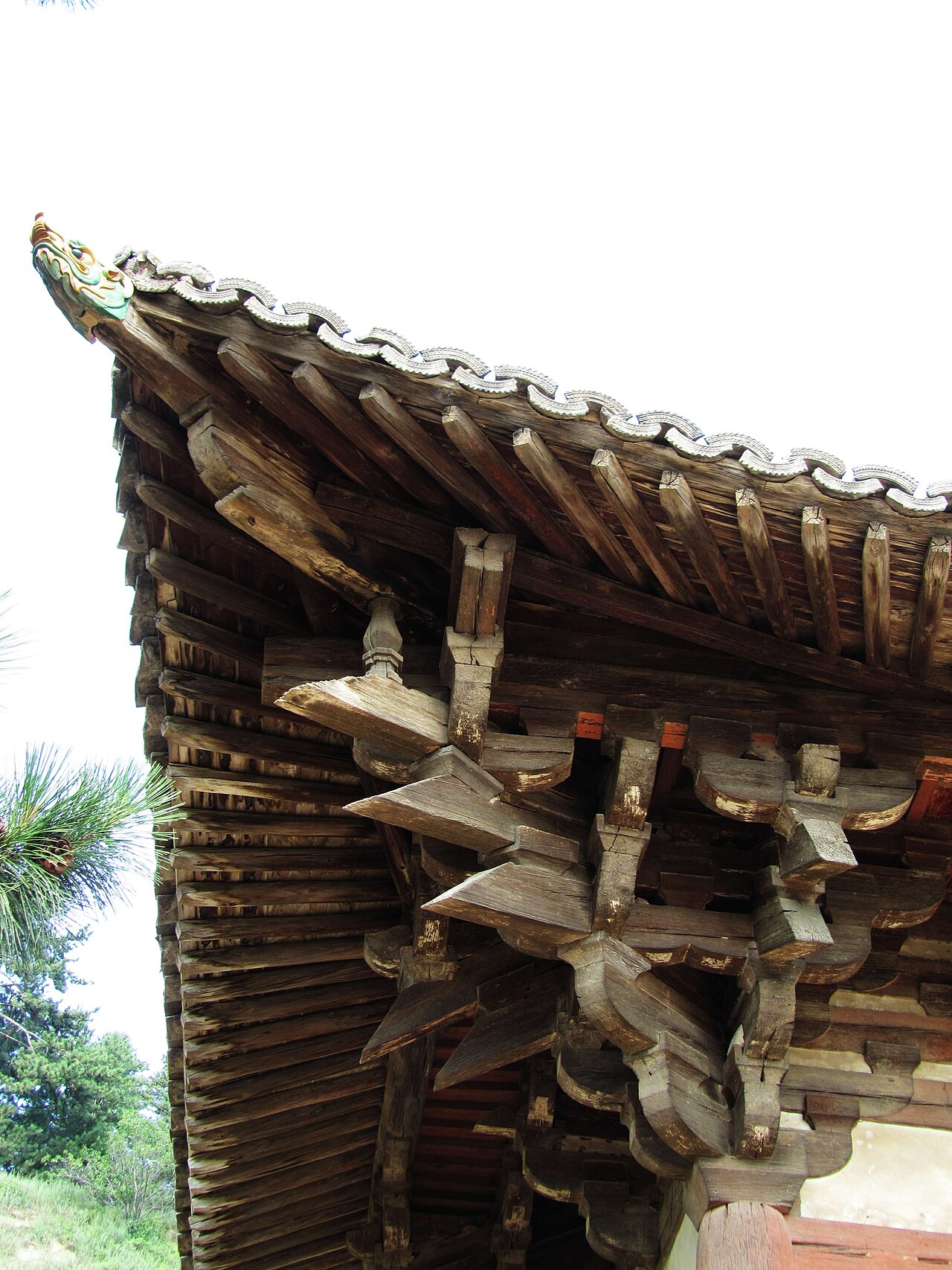
The hall is documented to 857 in the Tang period. Let that specific date attach to this particular structure; it does not make every neighboring building and repaired surface Tang. From an authorized position, look at the breadth of the roof, its projecting eaves and the bracket groups beneath. The 2011 detail photograph shows an actual corner bracket arrangement at this hall. It supports close looking even when your own visit offers a limited vantage point. It does not authorize touching timber, leaning over a barrier or climbing to reproduce the photographer's position.
Let the interior access determine the sculpture visit
UNESCO identifies the East Main Hall together with its clay sculpture as an exceptional survival. If current access permits a view, allow your eyes time to adjust and consider the figures in relation to the space around them before seeking an individual close-up. Use the current interpretation to distinguish original work, later additions and conservation. Ask what the permitted viewing position makes visible, and respect restrictions on entry, flash and photography. A photograph of a dark interior taken by someone else does not establish your own access rights.
If the interior cannot be viewed, spend the time on the hall's exterior form, its platform and the interpreted account of its construction. This is still a worthwhile visit when architecture is the reason you came, but it may change the value for someone whose sole interest is sculpture. Resolve that expectation before committing to the journey. Avoid describing an exterior-only visit as having seen the full sculptural ensemble. The guide's photographs deliberately show the real approach and exterior brackets without manufacturing an unrestricted interior experience.
References: 1
Leave with a precise account of two different places
Label photographs with the temple name and date as you go. Tayuan's White Pagoda, a particular hall at Xiantong and Foguang's East Main Hall are different subjects with different histories. A useful set combines an orienting view, a building in its court or terrace, and a permitted detail. Retain the sign or label in a separate reference image when allowed. This is enough to keep the story accurate without photographing every surface or interrupting a devotional activity.
Carry clothing for the actual forecast and keep the return arrangement visible in the plan. Ask services about steps, surfaces and assistance rather than assuming that a temple cluster is uniformly accessible. When the weather or an unexpected closure changes the day, preserve one complete visit and drop the optional stop. A satisfying Wutai trip can be a thoughtful Taihuai day, a carefully arranged Foguang visit or both across two days. It need not claim to have covered the entire mountain to be substantial.
Choose the day that fits your interest
For Taihuai, protect a morning for Tayuan and Xiantong, then take a meal break before choosing one extension. For Foguang, set aside a separate half-day block plus the confirmed journey from your actual base. These are editorial planning allowances, not guaranteed entry or driving times. Arrange the temple you care about most first; leave a flexible second stop rather than a tight onward connection.
Questions
Is Foguang beside the White Pagoda?
No. It is a separately located component requiring its own transport and access plan. The White Pagoda belongs to Tayuan in Taihuai; do not confuse the heritage property’s shared name with a walk-through connection.
Does a temple visit require a journey to all five peaks?
No. This itinerary is about selected cultural places. Any peak journey is a separate decision subject to current rules, suitable conditions and appropriate arrangements; it is not an automatic continuation of a Taihuai temple walk.
Sources and photography
- UNESCO: Mount Wutai
- Hong Kong Antiquities Advisory Board: original Shanxi study-tour report
- Angus Cepka: Great White Pagoda at Tayuan
- Daguang: Foguang East Main Hall, Shanxi Earthquake, 1986
- Patrick20242023: Foguang temple
- 猫猫的日记本: Foguang East Hall corner brackets
Photographs are credited beside each image. Their recorded capture dates describe the images; check the current visitor or product information linked above when planning.