Jingmai Mountain: Dapingzhang tea forest, Wengji village and a well-planned tea visit
Give Jingmai a day that connects an authorized forest walk with an inhabited village and a specific tea conversation. The core pairing is Dapingzhang Old Tea Forest and Wengji, with practical arrival questions, realistic activity expectations and exact-place photographs that do not confuse temples with tea cultivation.
Visit a cultivated forest and an inhabited village
Jingmai Mountain (景迈山), in Yunnan's Pu’er region, is significant for old tea cultivation beneath a forest canopy and the communities that maintain it. UNESCO describes a cultural landscape developed through Blang and Dai practices, linking tea groves, protective forest and traditional villages. Expect an agricultural and inhabited place rather than a uniform plantation with tea bushes clipped into open rows. This guide selects Dapingzhang Old Tea Forest (大平掌古茶林) and Wengji village (翁基) as the core pairing.
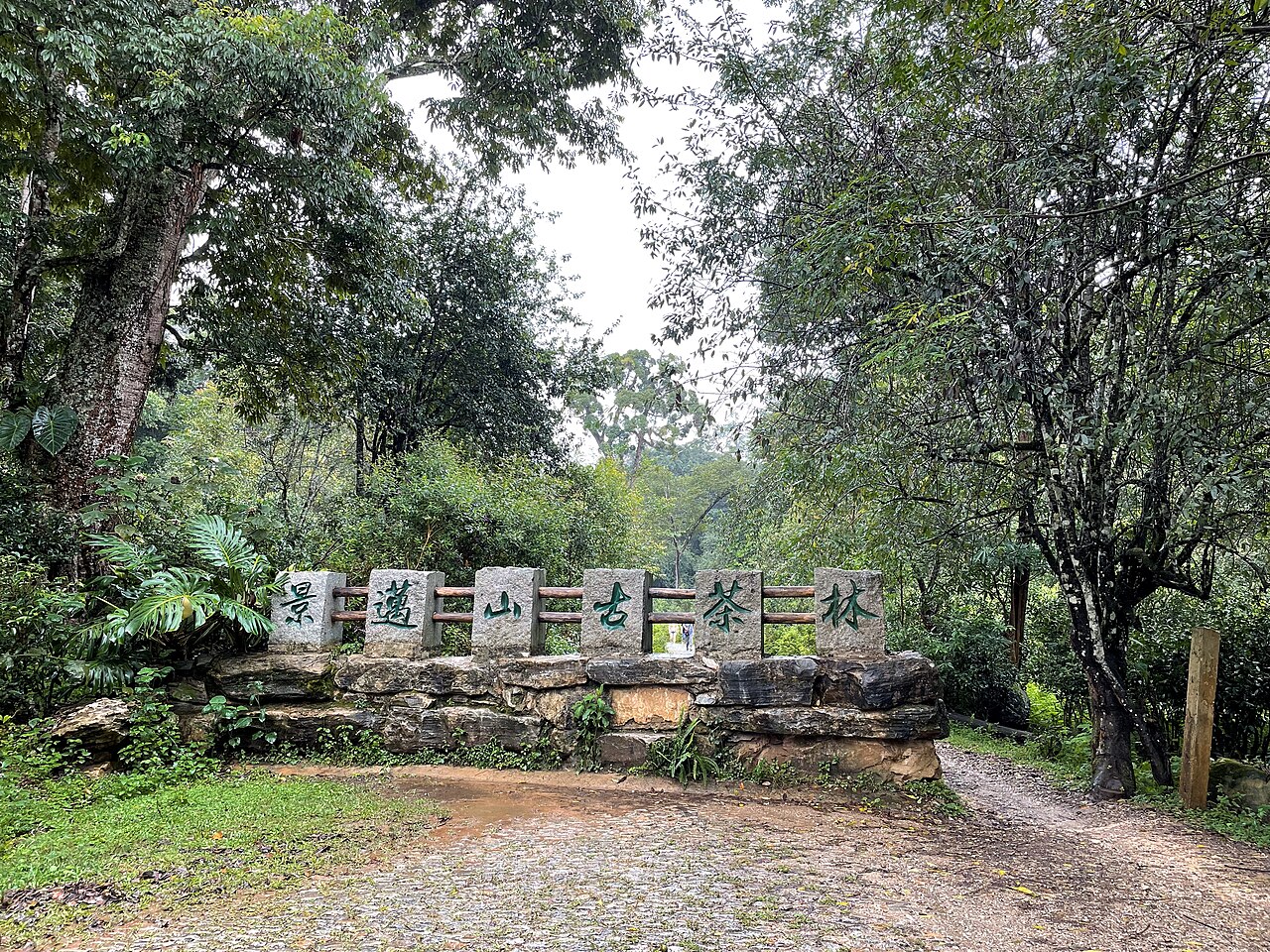
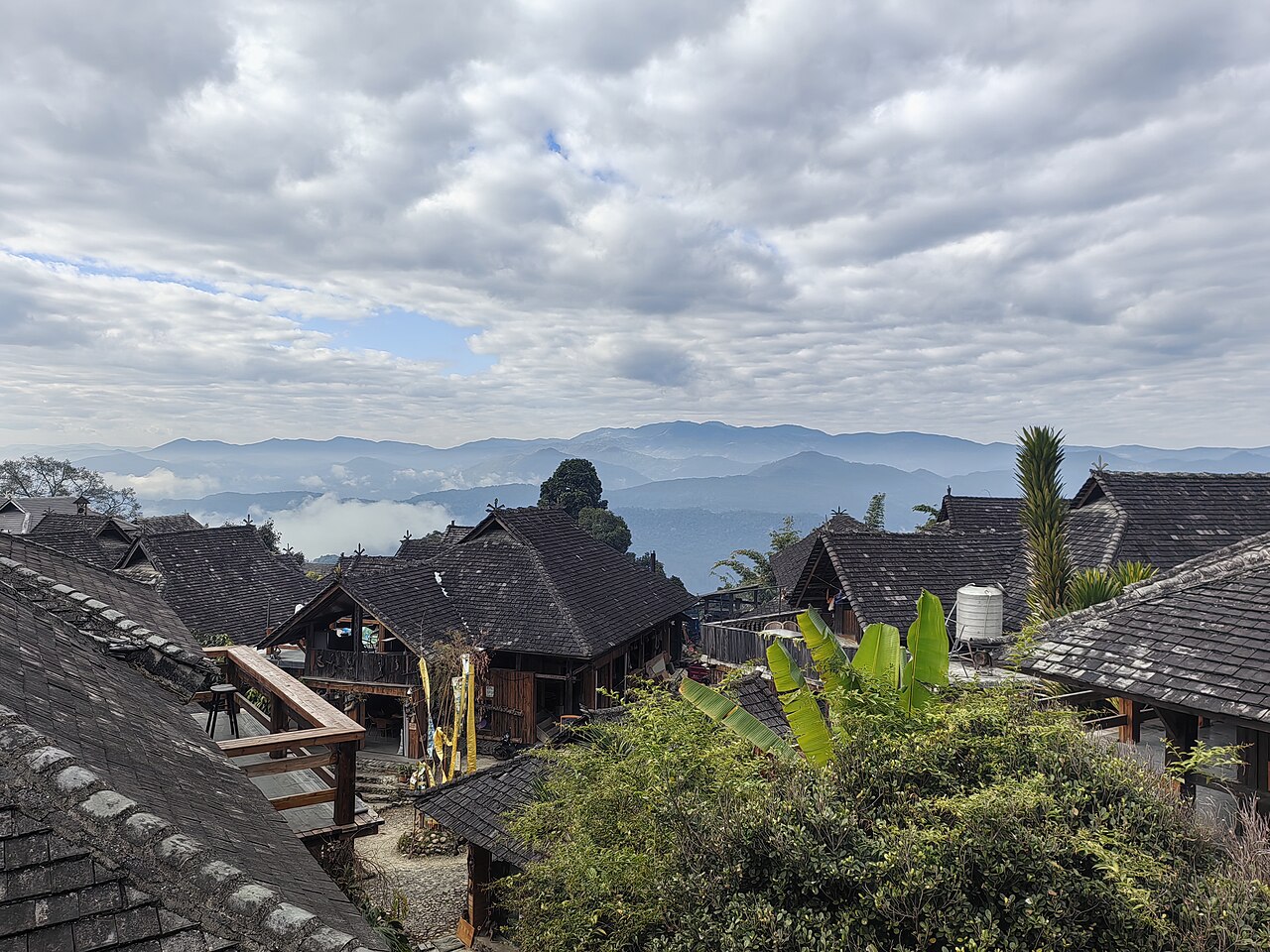
The two real photographs identify those places precisely: the entrance to Dapingzhang and a view over Wengji's actual roofscape. They do not use a distant tea estate or a golden temple as a substitute for the forest. With one full day, protect time for an appropriately guided forest visit, a meal and a village walk with a tea conversation. With two days, stay locally and add another confirmed village or interpreted subject rather than trying to collect every settlement on arrival afternoon.
Settle the mountain arrival and the last journey first
Use the exact accommodation and village name when arranging transport. A journey to Pu’er city, a county centre or an airport bearing the region's name is not the same as reaching your mountain lodging. Ask your provider to describe the actual arrival gate, parking or transfer point, the onward road journey and the final meeting arrangement. Save 景迈山, 大平掌古茶林 and 翁基 beside the relevant map pins. If your host proposes a village-and-forest outing, ask which forest route it actually includes.
Confirm current local road, parking, shuttle and admission arrangements through the responsible visitor service. This research does not establish a universal live fare or timetable for every way into the landscape, so no fixed transfer price or guaranteed journey duration is invented. Keep a departure margin for the return from the mountain before booking a tight onward connection. If you are using local transport, find out how the final service works before starting the forest walk; a phone signal or an available car later in the day should not be the entire return plan.
Dapingzhang: begin with the permitted forest route
The heritage management authority's September 2026 report specifically describes visits along stone-paved paths in the Dapingzhang core tea forest. Use the current authorized route, with an appropriate local explanation if available. At the start, ask where the walk returns, what the surface and gradients are like, and which areas are closed or used for work. The supplied August 2022 image shows the real entrance and surrounding vegetation. It identifies the destination, but does not establish today's complete route or guarantee unrestricted access beyond the sign.
Inside, ask the interpreter to identify an actual tea plant before you start labelling every small tree as tea. Look at that plant in relation to the taller growth and the surrounding ground. The essential contrast is cultivation within a forested setting, not simply the age or impressive size of one trunk. Ask how workers reach the plants, what management happens here and how the harvesting activity relates to the visitor path. Stay with the permitted route, leave leaves and attached plants in place, and avoid treating an invitation to look as permission to pick.
Give the forest visit one clear agricultural question
A useful question is how the canopy, tea plants and surrounding forest are managed together. Let a local interpreter explain the particular patch you are visiting rather than making claims about every grove from one photograph. An old tea forest can contain work, paths and human decisions; its significance does not depend on pretending it is untouched wilderness. Equally, a numbered sign or an attractive tree does not by itself establish a precise planting date. Ask what evidence supports an age statement when it matters to your understanding.
If harvesting or processing is offered as a visitor activity, confirm whether the season, current work and the host's permissions make it available. A dated account of a study tour does not guarantee a walk-in picking experience on your day. Ask what the session involves, its duration, price and whether the material you use comes from the specific forest you saw. If no activity is available, a careful explanation and a later tasting still form a complete visit. Avoid asking workers to repeat a task solely so it looks better on video.
Wengji: walk the public lanes before choosing a tea stop
Continue to Wengji, a village included in the provincial housing authority's original field inspection of Jingmai's traditional settlements. Start with a short public-lane walk, using current signs and local directions. The supplied December 2025 image shows real tiled roofs, timber buildings and the surrounding mountain setting. It is an inhabited landscape with contemporary needs, including visitor businesses, rather than a roofscape that exists only for the camera. Ask before entering a home, courtyard or upper-floor viewpoint.
Look at the relationship between houses, lanes and the land around the village, then choose a clearly offered tea service or an interpreted stop. A September 2026 report from the heritage management authority describes tea spaces and craft experiences in Wengji, but availability and booking still belong to the individual provider. Ask what is open now. If an interpretation point is staffed, it can help connect village life with the forest visit; if it is closed, do not treat an unmarked private building as a replacement exhibition.
Make the tea conversation specific and the purchase optional
Before accepting a tasting, establish whether it is complimentary, charged, attached to a workshop or conditional on another service. Then ask a few concrete questions: where was this lot grown, when was it harvested, how was it processed and what exactly is being poured? A tea can be interesting without every leaf having come from the old grove you walked through. Keep the seller's product description attached to the actual package rather than applying the World Heritage label to anything offered nearby.
Taste at a comfortable pace and say clearly if you would like a smaller amount or to stop. Buying is a separate decision. If you do buy, record the producer, lot or harvest information supplied, package weight, price and storage advice from that producer, and obtain a receipt. A friendly conversation is not proof of a tree's precise age, and an alleged rarity should not replace usable product information. You can support an agreed guide, meal or tasting service without feeling obliged to buy a large cake of tea.
Choose an extension that adds a different perspective
With extra time, consider a separately confirmed visit to Nuogan (糯干, also encountered in variant transliterations), a settlement identified alongside Wengji in the provincial field-inspection record. Ask a local service to show the exact place and current route rather than choosing a similarly sounding result on a broad map. Give it a specific reason, such as another interpretation of village form or community history. If transport makes the day tight, a longer Wengji conversation is more useful than a second village reached only for a departure photograph.
Sacred, community and working spaces have different expectations. Ask locally before entering or photographing a ceremony, and respect an instruction to leave a place private. The heritage account includes living beliefs and local management; those are not invitations to stage a ritual or search out restricted forest features. Keep the day grounded in encounters that are actually offered: an authorized forest walk, public village space, an interpreted conversation and a clearly agreed service. This protects the meaning of the visit as well as its practical quality.
Adapt to rain without losing the point of the trip
Ask about current path conditions, carry suitable footwear and clothing, and keep water and a simple return plan. Forest shade does not make every path dry or level. If rain or a closure affects Dapingzhang, use an available interpretation or village visit and arrange a permitted forest walk another time. Do not substitute an unmarked track merely because it passes under trees. If mobility support is needed, ask about the exact route and assistance before committing to the walk.
End by connecting the named forest with the named village and the tea you actually encountered. Caption photographs as Dapingzhang or Wengji, and distinguish a general landscape image from a documented particular plant. A good Jingmai visit explains why forest cultivation and community life belong together. It does not require an invented claim to have found the oldest tree, entered every sacred place or watched an entire production season in one afternoon.
One day with an optional overnight
Set aside a morning block for the confirmed Dapingzhang route, a proper meal and transfer, then an unhurried afternoon in Wengji with one agreed tea service. Use a local overnight if it improves the arrival and return arrangements. These are editorial itinerary blocks rather than measured walking times; confirm the actual route, transport and host availability before fixing an onward departure.
Questions
Can I pick tea during any forest visit?
No. A visitor route does not establish permission to harvest, and availability depends on actual work and the provider’s arrangements. Ask for an explicitly offered activity; an interpreted walk is complete without picking.
Does the heritage listing certify a tea purchase?
The inscription describes a cultural landscape. Ask the individual producer for the actual lot’s origin, harvest, processing and package information. Do not treat a regional heritage name as proof of every commercial claim.
Sources and photography
- UNESCO: Cultural Landscape of Old Tea Forests of Jingmai Mountain in Pu’er
- 919sth.: Dapingzhang Old Tea Forest entrance
- Yunnan Housing and Urban-Rural Development Department: original Jingmai village field inspection
- Jingmai heritage management authority, Huimin Town government and management company: September 2026 report
- Yumeto: Wengji village
Photographs are credited beside each image. Their recorded capture dates describe the images; check the current visitor or product information linked above when planning.