Kaiping in a day: Zili’s Mingshi and Yunhuan towers, then Majianglong’s village landscape
Give the diaolou a setting and a specific history. Start at Zili with Mingshi Lou, one permitted interior and a Yunhuan Lou comparison, then continue separately to Majianglong to see towers among houses and vegetation. The photographs identify the real buildings and village rather than recycling one tower under several names.
Choose a village pairing that shows more than a tower façade
Kaiping's diaolou are multistorey village towers whose forms combine local building traditions with overseas architectural influences. UNESCO connects them with returning emigrants and their links to communities abroad. They include communal refuge, private residential and watchtower forms; one impressive silhouette does not tell you which function a particular building served. This day pairs Zili village (自力村) with Majianglong (马降龙), giving the tower and its village setting equal attention.
Zili is a good first stop for an identified residence such as Mingshi Lou and for comparing several façades. Majianglong adds a contrasting relationship between towers, low houses and dense vegetation. They are separate destinations with a transfer between them, not two neighborhoods reached by following one village lane. If you have only an unhurried half-day, choose Zili with one interpreted interior and retain a complete experience there instead of reducing both locations to gate photographs.
Arrange the two entrances, the middle transfer and the final pickup
Save 自力村 and 马降龙 alongside the exact visitor-centre pins. The village names matter more than a general request for the Kaiping towers, since many buildings and several tourism products share the regional label. Agree whether a driver waits, returns at a fixed time or provides only the first leg. If using public transport, check the actual current stops and last useful return service before committing to the village pairing. A straight line on a regional map is not an invitation to walk the entire connection.
Confirm the current admission product, its date validity and which interiors it permits. The municipal tourism directory groups Zili, Majianglong and Li Garden within the broader tourism area, but that does not establish that every current ticket includes all three or that all have the same heritage-component status. This research did not establish a reliable live operator checkout price, so no old package total is recycled. Buy for the specific visit you intend, and keep transport, guiding and any optional garden visit clearly identified in the booking.
References: 2
Zili: start with the village layout and identify Mingshi Lou
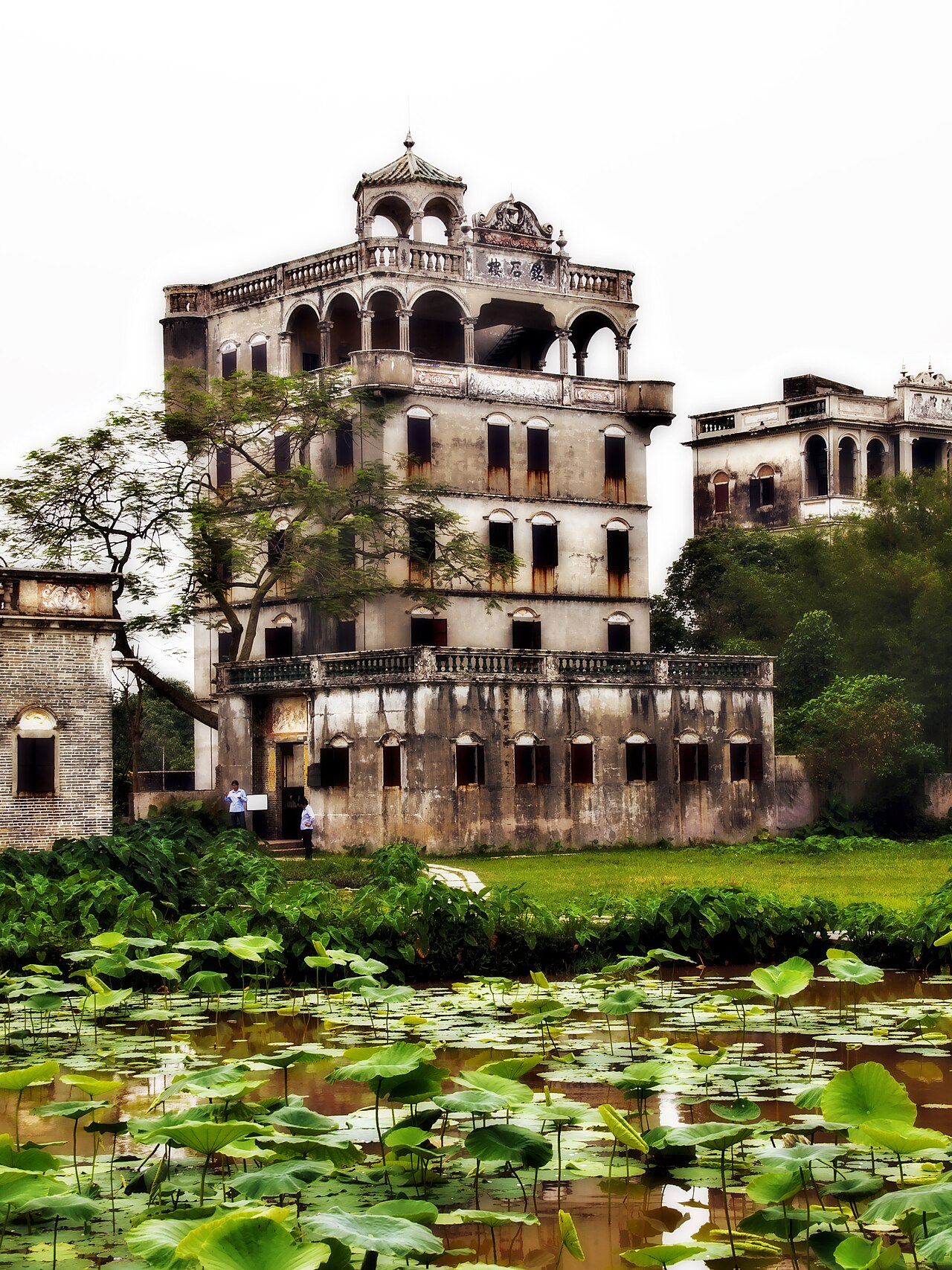
Use the current map to orient the village walk before entering the first tall building. Find the relationship between the lower houses, open space, ponds and towers. Then locate Mingshi Lou (铭石楼) by its actual sign. The municipal authority identifies it as the residence built for the returned emigrant Fang Runwen. Its history gives the visit a particular household and overseas connection rather than leaving the story at the general claim that every tower was a fort.
The supplied April 2009 photograph shows Mingshi Lou itself, including its nameboard, arcaded upper level, pavilion and pond-side setting. From a permitted public position, look at the contrast between the repetitive lower openings and the more open, decorative upper part. Ask the interpreter which features served domestic life, display or protection. Visible bars or a small opening can prompt the question, but they should not be assigned a precise historical purpose solely from a visitor's guess.
If open, use one interior to understand a residence
Before joining the interior route, ask which floors and rooms are open and what the current circulation requires. Give one permitted residential interior enough time to connect rooms, stairs, stored belongings and the exterior you just saw. Read object labels to distinguish a documented original furnishing from a later display arrangement. A collection of attractive period objects is not proof that every item belonged to the named family. The building becomes more intelligible when the account keeps those distinctions clear.
A rooftop or upper-floor view can help explain the tower's relationship to its surroundings if it is actually permitted and suitable for your group. It is an optional opportunity, not a guaranteed feature of a village admission. If the route is crowded, let descending visitors pass and avoid stopping on the narrowest stair. Ask about steps, handrails and alternatives before entering if mobility is a concern. A careful exterior and interpreted ground-level visit remain useful when upper floors are closed or impractical.
Compare Yunhuan Lou without turning style into a guessing game
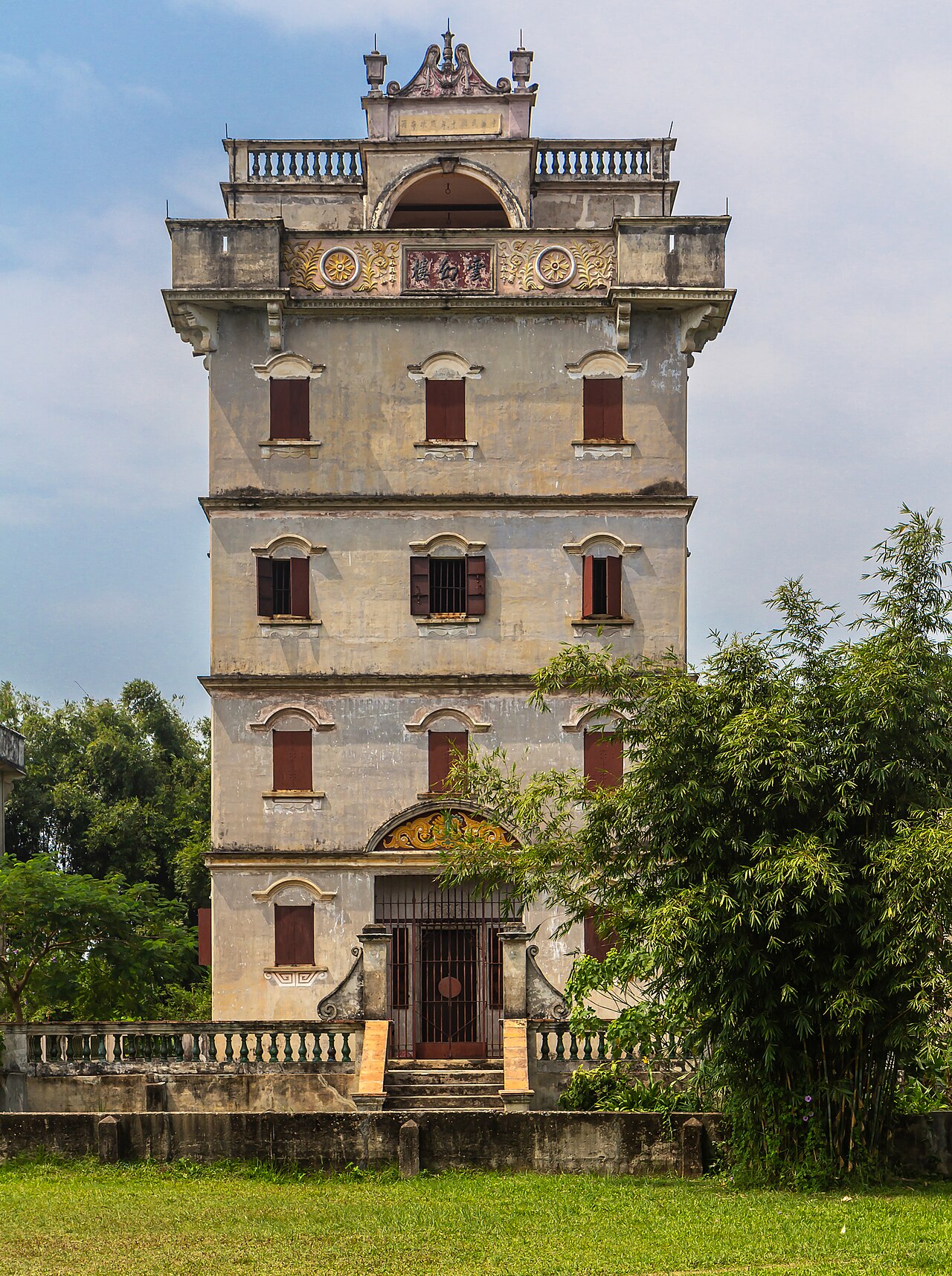
Continue to Yunhuan Lou (云幻楼) on the permitted village route. The supplied October 2016 photograph shows that exact tower, with its visible nameboard, stacked windows and decorative upper frontage. It is deliberately not labelled as Mingshi Lou merely because both stand in Zili. Compare the width, opening arrangement and upper silhouette with the first building. One may be easier to recognize afterward through a specific observed feature than through a long list of borrowed European style labels.
Use the current interpretation for ownership, construction date and function. An arch does not by itself prove an Italian architect, nor does a classical-looking ornament establish that the building was imported complete from abroad. UNESCO's broader account concerns cultural interchange and local adaptation. Ask how that account applies to the particular tower before you. Two well-identified exteriors, with one good interior if available, provide a coherent Zili visit without entering every accessible door simply because the ticket allows it.
Majianglong: see the towers through their village setting
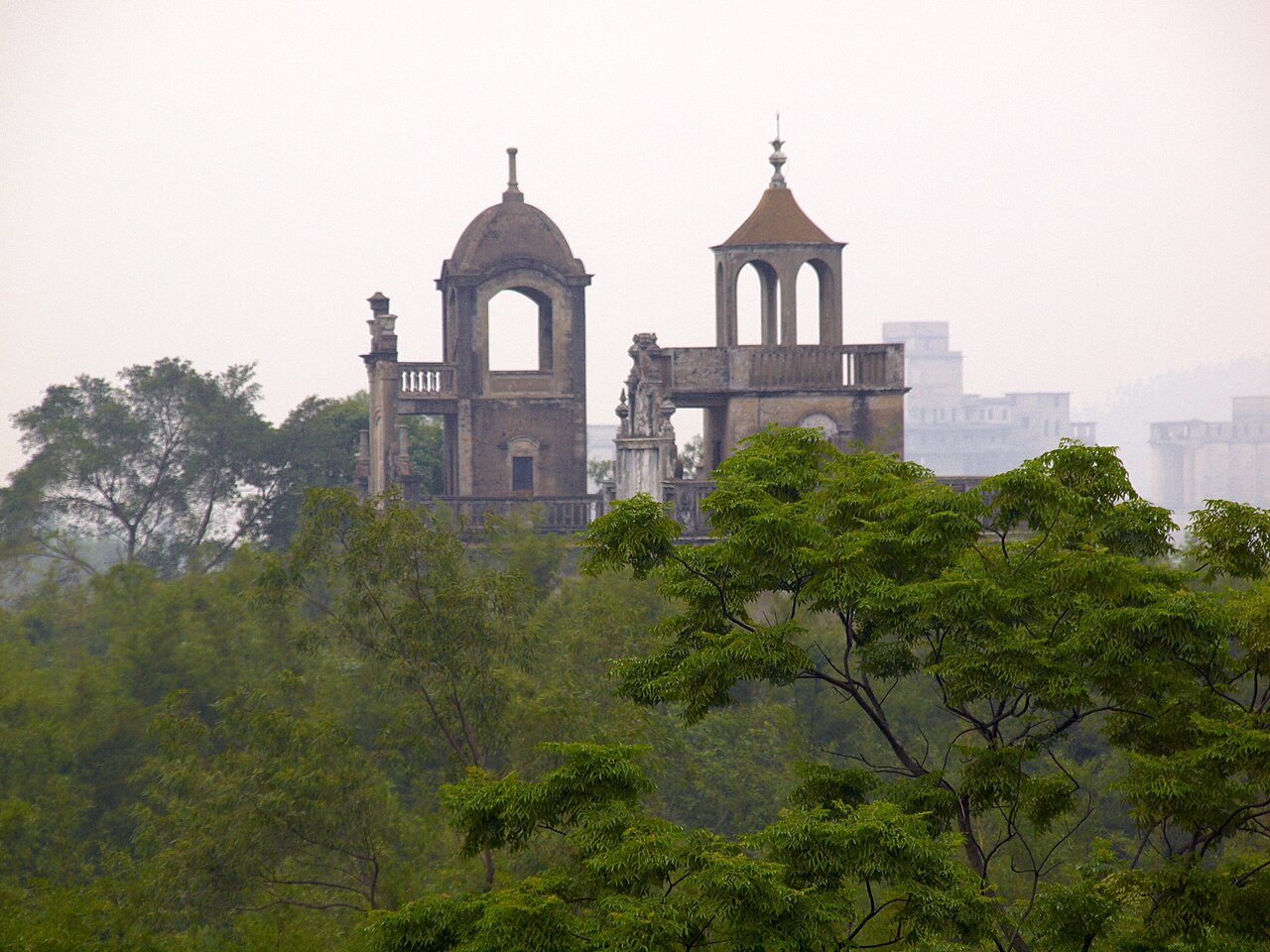
After a proper meal or rest break and the confirmed transfer, enter Majianglong through its responsible visitor arrangements. The Baihe town authority describes a cluster of villages associated with hills, the Tanjiang River and bamboo. Begin with a permitted public path that lets you see the lower settlement and vegetation before seeking an elevated view. Dense growth can partly hide a tower, which is part of this setting rather than a reason to leave the path to obtain a cleaner façade.
The real April 2009 photograph shows diaolou rising above vegetation at Majianglong. It does not establish the individual tower names from the view alone, so the caption does not invent them. At the site, match any named building with its actual sign before recording the identification. Compare the way the tower appears among houses and trees with Zili's more directly framed façade views. The second stop should add this relationship, rather than repeat the same close-up of windows and decorative roof forms.
Keep other destinations as deliberate additions
Li Garden (立园) can be a separate choice for garden design and overseas-family history if its current access and transport fit. Chikan and the other diaolou clusters are also distinct outings, not automatic extensions hidden behind Majianglong's exit. Decide what additional subject would improve your day before buying a wider package. If the core interest is how defensive residences sit within living villages, you may already have answered it with Zili and Majianglong.
Finish with the return margin intact. Keep water and weather protection available, use the actual public routes and leave working or residential space passable. Ask before photographing residents closely or entering a private threshold. For your own photographs, include the village name and the building name when it is established. The difference between Mingshi Lou, Yunhuan Lou and an unnamed Majianglong view is useful information; the broad label Kaiping tower loses the exact relationship that made the day worth planning.
A useful two-village allocation
Allow roughly two to three hours for Zili, a separate meal and actual transfer, and around 90 minutes to two hours for the chosen Majianglong route. These are editorial planning blocks rather than guaranteed walking or queue times. If transport or opening leaves only a short afternoon, choose one village and one clearly explained building instead of preserving the full pairing at a rush.
Questions
Is every diaolou a watchtower?
No. UNESCO distinguishes communal refuge towers, private residential towers and watchtowers. Use the particular building’s interpretation to establish its role rather than applying the same label to every tall structure.
Will the village ticket guarantee a rooftop visit?
Check the actual open-building and floor arrangements. A ticket to a village does not establish that every tower or roof is accessible. The exterior and its relationship with the village can still support a worthwhile visit.
Sources and photography
- UNESCO: Kaiping Diaolou and Villages
- Kaiping municipal government: official tourism-area directory
- Kevin Poh: Mingshi Lou at Zili
- Stefan Fussan: Yunhuan Lou at Zili
- Baihe town government: Majianglong diaolou and villages
- Kevin Poh: Majianglong Diaolou
Photographs are credited beside each image. Their recorded capture dates describe the images; check the current visitor or product information linked above when planning.