Pingyao on foot: South Street, Rishengchang and the courtyards behind the shopfronts
Use a half-day in Pingyao to connect a busy commercial street with the deeper spaces of a former remittance bank. The useful sequence is South Street, the City Tower area, West Street and a properly interpreted visit to Rishengchang. Three real photographs show the street and the bank's courtyards, so you can see the difference before arriving.
Know which Pingyao you are planning to visit
Pingyao's walled old city is in central Shanxi. UNESCO identifies it as a well-preserved county-level city with streets, shops, dwellings, temples and important banking buildings. Its financial prominence belongs particularly to the nineteenth and early twentieth centuries. This guide concentrates on the connection between commercial frontage and an interpreted bank interior. It is a better use of a short visit than entering several similar museums before you can explain what makes the first one significant.
Keep three Chinese names beside your map: South Street, Nan Dajie (南大街); West Street, Xi Dajie (西大街); and Rishengchang, Ri Sheng Chang (日昇昌, also written 日升昌). The City Tower is Shilou (市楼). The heritage property also includes Shuanglin and Zhenguo temples outside the walls. They are separate excursions, not stops hidden somewhere along this town walk. Choose them for a different purpose rather than extending the morning until it accidentally becomes an unrealistic tour of the whole UNESCO property.
Settle the ticket and meeting-point questions first
Before buying, name the interior you want: the Rishengchang former bank site and museum interpretation. Confirm the current product, validity, admission cutoff and required identity document with the responsible visitor service. This research did not establish a reliable live operator price or timetable, so none is invented here.
Arrange an identifiable arrival and departure point using the current map and the accommodation's or provider's actual instructions. A pin in the middle of the old city may be a useful landmark but a poor meeting description. Confirm the precise gate or street location and whether the vehicle can reach it. Save the names offline. If your time is constrained by a train or onward transfer, make the interior visit the firm priority and keep the final lane walk optional instead of booking transport around an untested optimistic finish.
Start on South Street and walk toward the City Tower
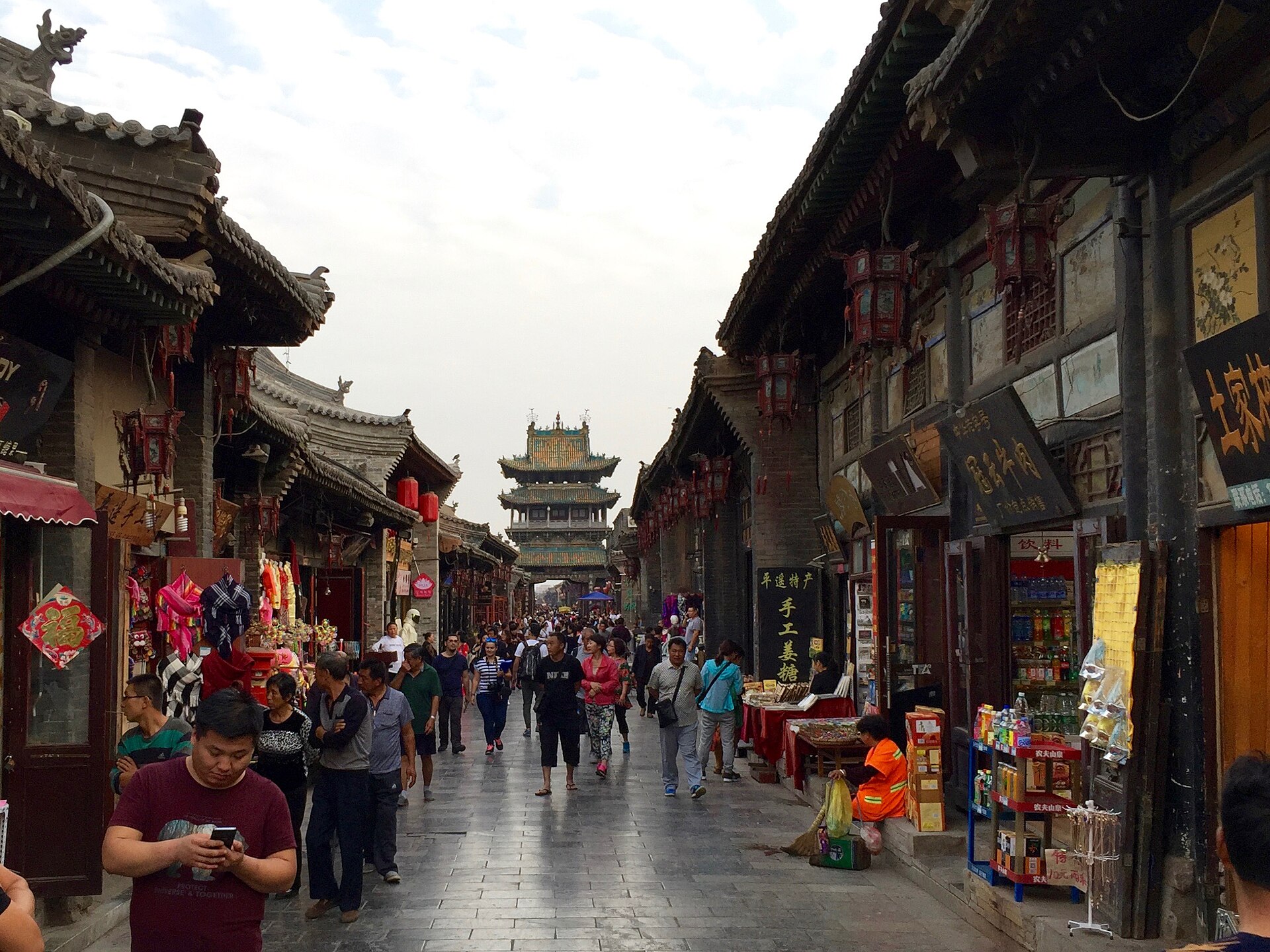
Begin with a short section of South Street, using the City Tower as the principal visual landmark. A Palace Museum study report identifies South Street as the historic town's axis and the tower as its centre. The supplied 2016 South Street photograph shows the practical scene: shopfronts, signs, people and a tower framed by the street. It is not an empty architectural set. Walk at an ordinary pace first, then choose a place beside the flow to compare two neighboring frontages.
Look at the difference between a shop's visible street width and its entrance. Note the threshold, sign position and anything that controls what can be seen behind it. Do not assume that a current souvenir shop continues the same historical trade, or that every attractive doorway is a museum entrance. The question is how a commercial building presents itself to the street. Use the current city map near the central area to locate West Street and the named bank, rather than collecting side lanes simply because they look photogenic.
References: 2
Move to West Street and identify the actual Rishengchang entrance
Rishengchang is the former piaohao stop chosen for this walk. A recent first-person account on a government site places it on West Street; use that as locational context, not as an operator timetable. At the site, match the Chinese name to the museum or monument identification before joining a queue. Avoid confusing the historic bank with a shop or business using a similar-sounding name. Ask about the current visitor route and any spaces that are not included before treating a courtyard seen through a door as public access.
Pause outside for one deliberate comparison: what can you understand from the frontage, and what still lies out of sight? Save the deeper questions for the interior. A typical unhelpful first impression is that a narrow entrance means a small establishment. The visit lets you test that impression against the actual permitted sequence. It also gives the street walk a purpose: you have arrived with a question about depth, visibility and the relationship between public business and rooms set farther back.
Inside: follow the doors and courtyards before assigning functions
Follow the museum's indicated route, then look back from an appropriate stopping point to understand the succession of spaces. Draw only a simple line of boxes: entrance, courtyard, doorway, next permitted space. Mark where your view continues straight ahead and where a wall, turn or closed door interrupts it. This is more useful than trying to memorize every room name while a group is moving behind you. Do not block an opening to obtain a perfectly centred photograph.
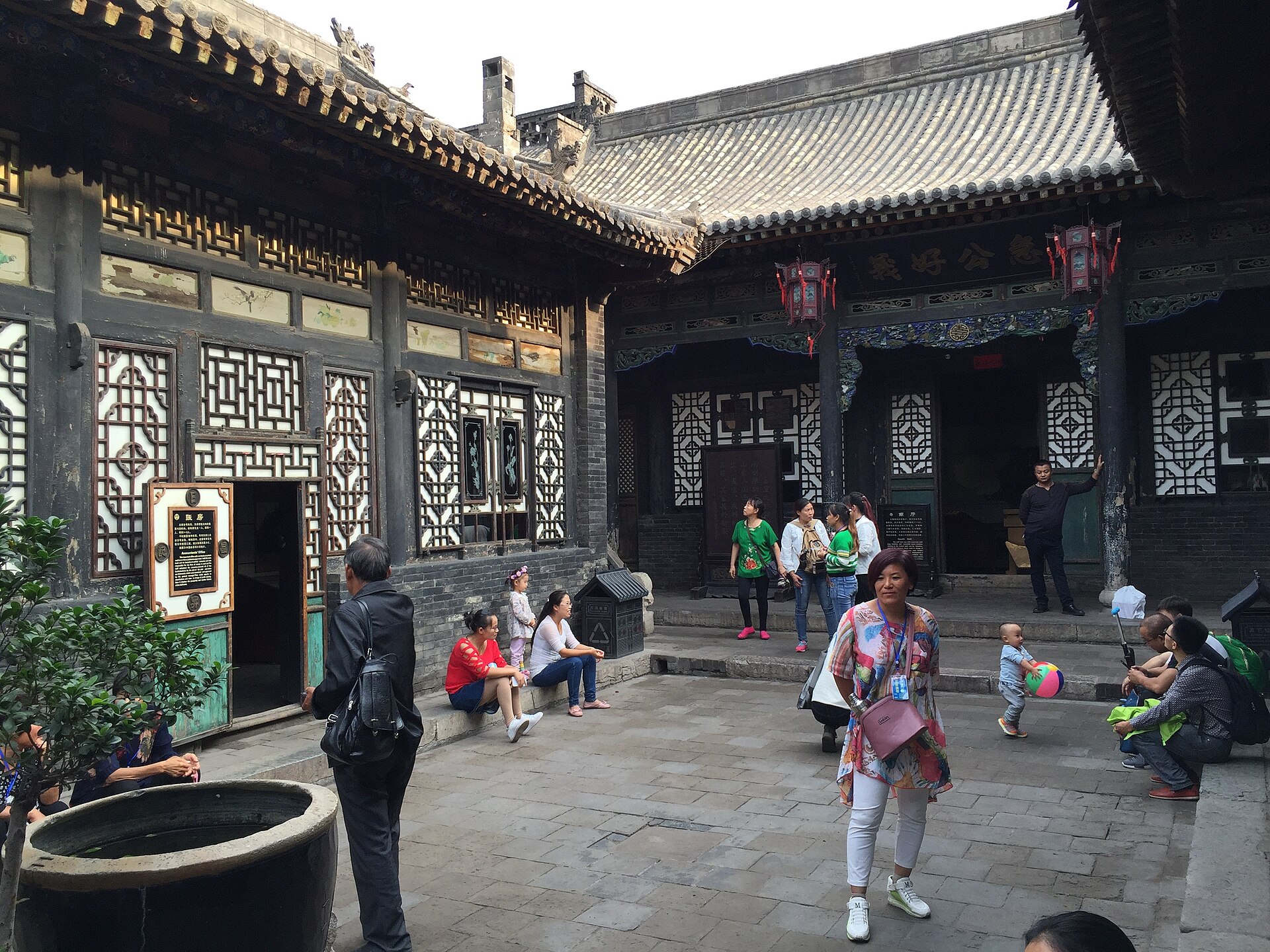
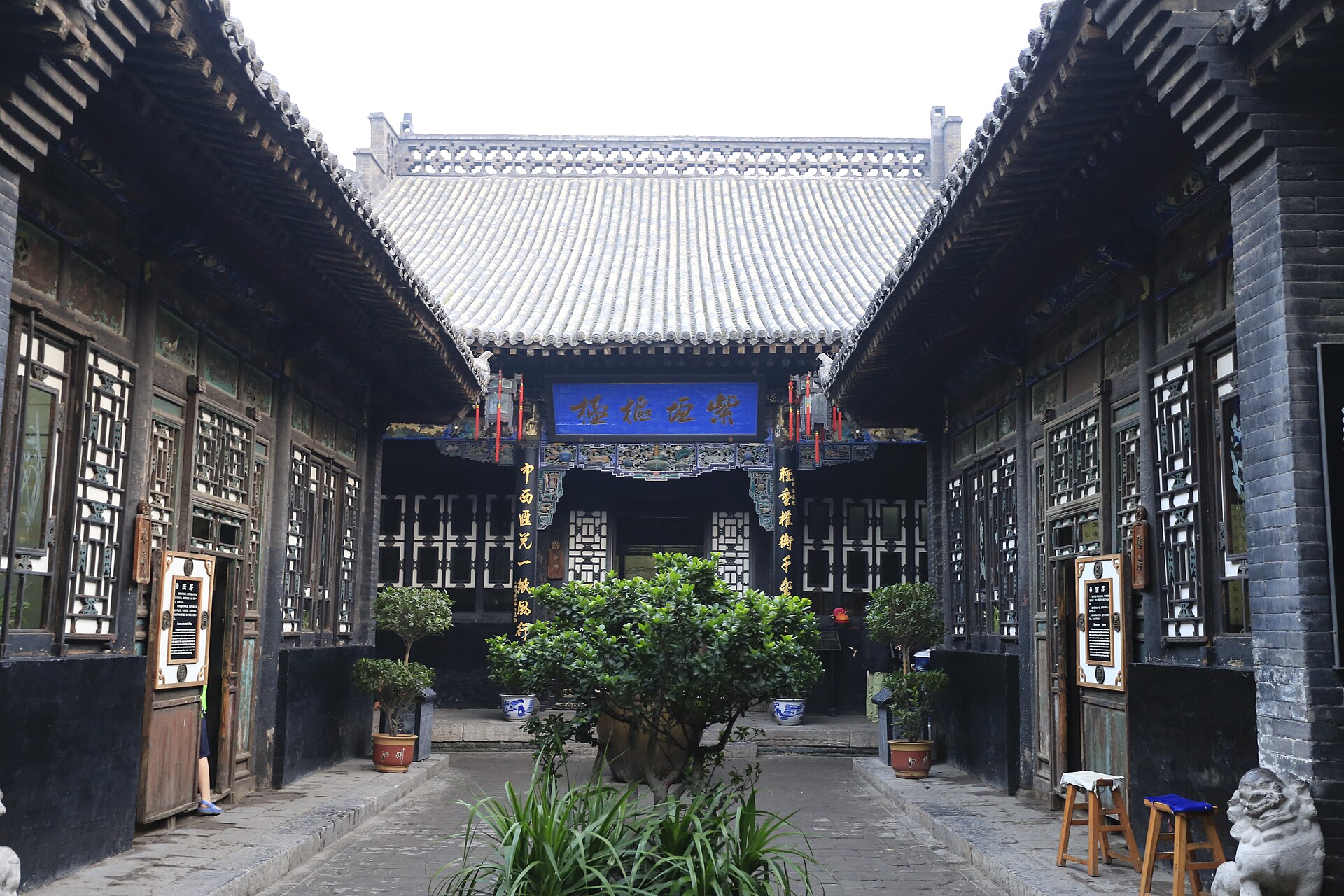
The two courtyard photographs supplied here were taken at Rishengchang in 2013 and 2016. They show tiled roofs, side rooms, labelled interpretation and doorways across the courtyard. Use them as examples of the spatial question, not a guaranteed present-day room sequence. Read the on-site labels for the actual functions. If a room is identified as an accounts or business space, ask which object or document explains that role. A large room is not automatically a treasury, and an impressive doorway is not enough to reconstruct a banking operation.
Give the banking history one clear question
Piaohao were involved in currency remittance: that is the basic business question to take into the interpretation. Ask how a payment instruction, record or branch relationship allowed a transaction to be handled across places. Look for the evidence actually displayed, whether an original document, reproduction, account of practice or reconstructed setting. A room full of period-looking objects does not make every object original to this bank. Keep each object's identification attached to the explanation you take away.
Use this deliberately simplified example to frame your questions: imagine a merchant arranging for a sum to be received in another town rather than describing the movement of a heavy chest in person. What identifies the payer, recipient and place, and what establishes that the instruction should be trusted? This is an illustrative model, not a transcription of Rishengchang's procedure. Let the museum explain the actual documents and practices. You will leave with a more coherent account than a claim that you saw China's first bank without being able to describe what its business involved.
References: 6
Return to the street, then choose one modest extension
After the bank visit, take a proper break before choosing another interior. Walk a short public section of West Street and compare what you now notice about entrances, building depth and the continuity of frontages. Use a genuinely public lane if you want a quieter contrast, but do not enter occupied courtyards or photograph people through domestic doorways. A living old city includes shops, homes and work that are not visitor exhibits. End the comparison where its point is clear rather than searching for an allegedly untouched backstreet.
For the remaining time, choose either one more clearly different interpreted subject or an open, confirmed city-wall visit, not an automatic chain of banking museums. If you mainly wanted the streets and courtyard relationship, you can finish after the break. If sculpture or early timber architecture is the priority, plan Shuanglin or Zhenguo separately with actual transport and admission information. UNESCO identifies those as distinct temple components; trying to squeeze them into the same short town loop loses the reason to visit them.
References: 1
Make the walk comfortable and the photographs useful
Ask the responsible visitor service about surfaces, thresholds and support on Rishengchang’s actual route; a historical courtyard photograph does not establish uniform accessibility. If the interior is impractical, retain the street comparison and choose another appropriate interpreted stop. Agree a shorter plan before tiredness or closing time forces the decision.
Where photography is permitted, take a street-facing approach, a courtyard-wide view and one labelled detail. Add the exact site and date to the file. Our 2013 and 2016 photographs depict Rishengchang itself; present signs, exhibits and crowd levels may differ. Distinguish visible features from functions established by museum interpretation.
An illustrative half-day allocation
Set aside approximately 30–45 minutes for the selected South Street approach, a separate 60–90-minute allowance for Rishengchang, and time afterward for a break and short public-lane comparison. These are editorial allowances, not measured queue or walking guarantees. Adjust to the actual opening and your group. When time runs short, remove the final extension first; do not turn the core interior into a hurried pass-through just to add another ticket checkpoint.
Questions
Can I do the street part without entering Rishengchang?
Yes, subject to the actual access arrangements. Compare public frontages and the tower relationship, but leave interior layout and functions unresolved. Do not treat a view through a door as permission to enter or as evidence that you completed the courtyard study.
Are Shuanglin and Zhenguo inside the walled-city walk?
No. UNESCO identifies them as separate temple components outside the city. Give them a distinct plan with actual transport and admission information rather than searching for them along South or West Street.
Sources and photography
- UNESCO: Ancient City of Ping Yao
- Palace Museum youth heritage field report, published by the Ministry of Culture and Tourism
- Pingyao travel essay, Dongtai Procuratorate cultural page, June 2026
- Commons: RiShengChang, Bairuilong's original photograph
- Commons: Pingyao Rishengchang Jiuzhi, Zhangzhugang's original photograph
- National Office for Philosophy and Social Sciences: Shanxi contract-document research conference report
Photographs are credited beside each image. Their recorded capture dates describe the images; check the current visitor or product information linked above when planning.