Ji’an’s Koguryo sites: Guonei’s town walls and Wandu’s mountain setting
Build a coherent Ji’an heritage day around an interpreted museum start, a selected Guonei wall section and the separately reached Wandu Mountain City. Exact-place photographs show the difference between low remains within the modern town and masonry against a mountain backdrop, with practical choices for adding a stele or tomb visit.
Base the comparison in Ji’an, not across two provinces
The UNESCO property Capital Cities and Tombs of the Ancient Koguryo Kingdom includes places in both Liaoning and Jilin. This guide selects the two city settings in and around Ji’an (集安), Jilin: Guonei City, Guoneicheng (国内城), within the modern urban area, and Wandu Mountain City, Wandu Shancheng (丸都山城), in a mountain setting. Wunu Mountain City in Huanren, Liaoning, is another component of the inscription, not an extra stop somewhere on the same town walk.
The comparison is rewarding precisely because these places do not resemble two fully standing castle compounds. Guonei puts surviving city fabric beside the modern town; Wandu makes the surrounding terrain harder to ignore. Add the city museum for an interpreted starting point, then give each outdoor setting a clear purpose. You can understand the difference without attempting a reconstruction of the entire ancient capital or turning every scattered stone into a supposed defensive feature.
References: 1
Start with the museum if its current arrangements suit the day
Ji’an City Museum, Ji’an Shi Bowuguan (集安市博物馆), is a useful first stop when open. The city tourism authority includes it in its official heritage-day route together with the main archaeological components. Ask about current opening, booking, identity requirements and any gallery changes before planning the morning around it. The authority's archived itinerary is evidence for the named places and their relationship to a heritage visit, not a dependable 2026 timetable. No old opening hour or ticket price is presented here as current.
Inside, give the maps and site plans priority over trying to read every label. Locate Guonei and Wandu, then choose one object with a clear find context and one explanation of city layout. Ask whether a displayed architectural element or image comes from a city, a tomb or another site. Those categories are related historically but answer different questions. Leave with enough geographical orientation to recognize the outdoor places. The museum should make the ruins more intelligible, not consume the entire day before you reach them.
References: 2
Guonei: see how an ancient city survives within a present one
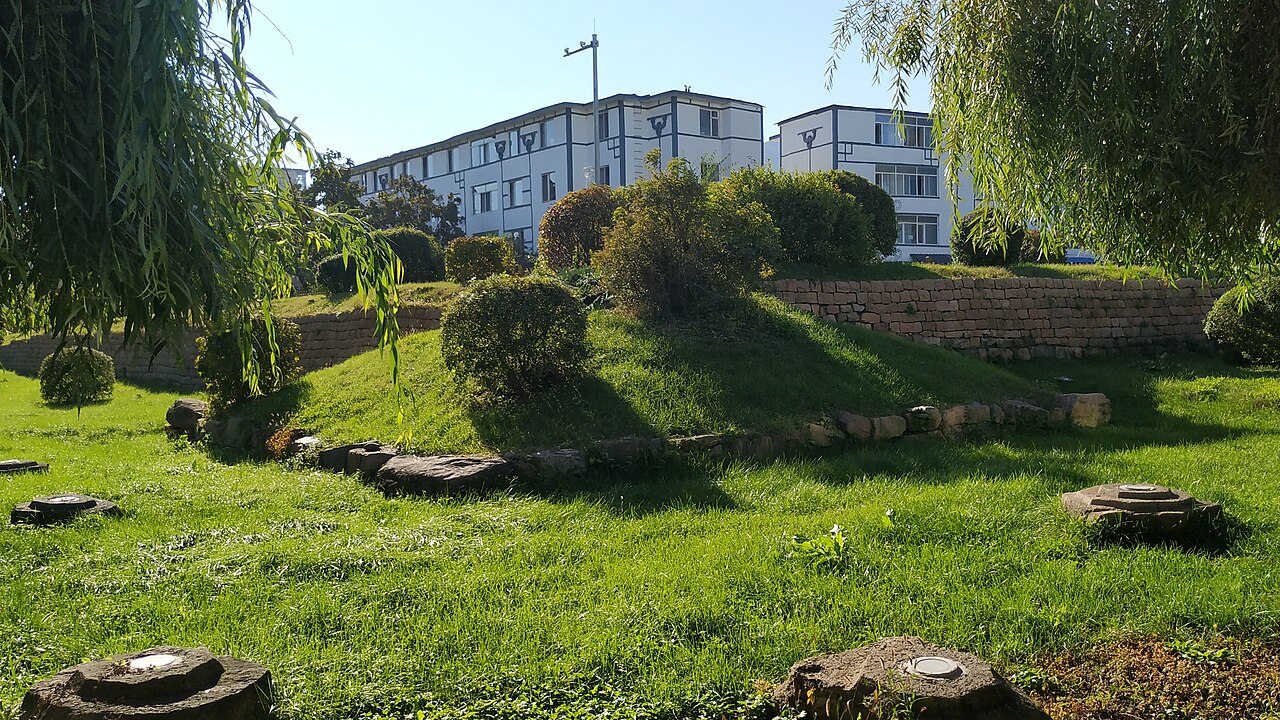
Use the current heritage map to find an identified, publicly accessible section of the Guonei city-wall remains. Start with a corner or a stretch whose sign establishes the site name and the feature being presented. The supplied 2018 photograph is explicitly the southeast corner of Guonei, also called Gungnae in its English file title. Its low masonry, grass-covered ground and neighboring modern buildings show why expecting an isolated monumental fortress would set up the wrong visit.
Stand back enough to see how the wall line meets the surrounding streetscape, then look at the stonework from the permitted path. Let interpretation distinguish surviving fabric, repairs and later presentation. Do not climb low masonry just because it appears easy to cross, and do not use an architectural fragment as a seat. If you encounter modern statues or decorative panels in the surrounding public space, identify them as contemporary interpretation rather than ancient finds. The town's current use is part of what you are seeing, not a defect to crop out of every photograph.
Arrange the Wandu transfer as a separate leg
After the selected Guonei section, take a meal or short break and continue to Wandu's confirmed visitor entrance. Save 丸都山城 in Chinese for the driver. The alternative spelling Hwando in international material refers to the same archaeological mountain-city destination here; it does not mean you should search for a different site across the border. Agree both the arrival point and the return plan, and ask whether the vehicle waits or a later pickup must be arranged.
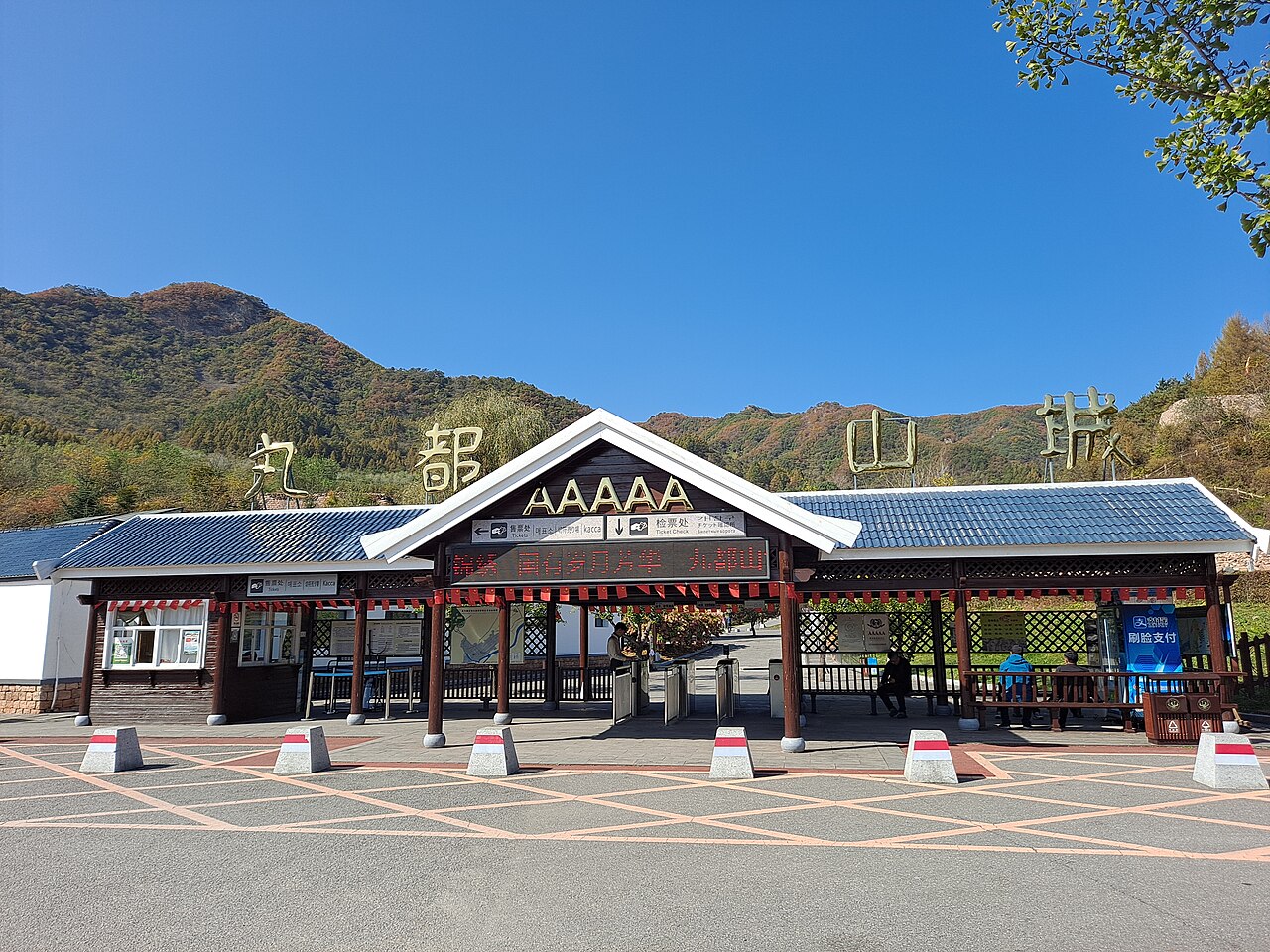
The 2023 entrance photograph is included for an honest practical reason: the modern visitor entrance is a contemporary service building beneath a real mountain backdrop. Its large name sign helps identify the destination, but the image does not verify today's ticket desk, payment methods or barriers. At the site, confirm the permitted route, which interpreted remains are accessible and whether weather has affected a path. Avoid committing to a full circuit before knowing the ground and the group's stamina.
References: 4
Wandu: read the mountain basin before looking for a palace
First take in the relationship between the permitted path, the rising ground and the named remains. UNESCO describes Wandu as a mountain capital with palace vestiges and a layout closely related to its natural environment. That does not mean a complete palace stands waiting around the next bend. At an interpreted feature, use the plan to establish what it represents and how it sits in the larger site. The form of the ground can remain clear even when a building survives only at low level.
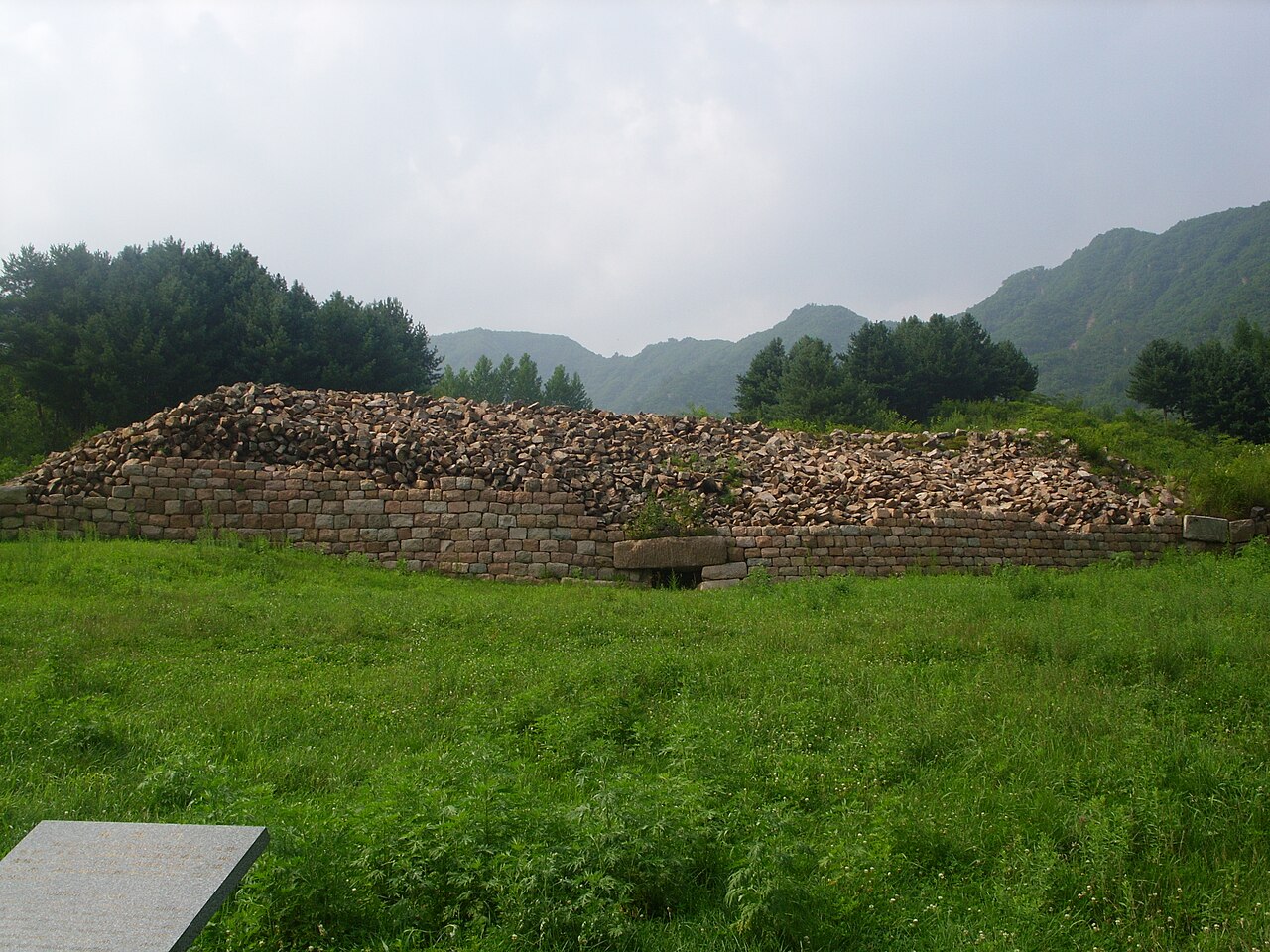
The supplied 2010 photograph shows actual stone remains at Wandu with wooded hills behind. It is a useful counterweight to an idealized artist's reconstruction: the visitor encounters masonry, grass, changing terrain and interpretation. Follow the signed route to the open features that interest you, then turn back when that route or your time requires. A modern path may make the site legible without reproducing an ancient approach. Do not label a convenient opening as a historical gate unless the site's interpretation identifies it.
Choose one extra subject: the stele or a tomb visit
If the two city visits leave time, choose an additional subject with confirmed access instead of treating all burial and inscription sites as interchangeable. The Haotaiwang Stele, Haotaiwang Bei (好太王碑), offers an inscription-focused visit. Changshou Wangling (长寿王陵), also often encountered in tourist material under the General's Tomb name, is a separate burial monument. Use the official map and exact site identification when booking rather than relying on a nickname alone. The city tourism authority lists these as distinct stops.
At a stele, a transcription, rubbing or explanatory display may reveal more than attempting to read a distant weathered surface unaided. At a tomb, the exterior construction and burial interpretation are the relevant questions. Neither a heritage listing nor a combined commercial tour description guarantees entry to a chamber. Ask what is actually accessible. If your main interest is mural painting, confirm whether the visit provides an original, a reproduction or a mediated display before paying for an outing on that expectation.
References: 2
Keep terrain, tombs and modern interpretation clearly identified
The two-city comparison is strongest when it stays concrete: Guonei's surviving wall line within a present-day town, and Wandu's remains in a mountain setting. A guide may explain historical relations between them, but you do not need to invent a military plan from your own viewpoint. Vegetation, excavation and modern visitor routes shape what is visible today. Ask where an interpretation comes from, particularly when a story seems to explain every hill and stone with unusual certainty.
Photograph one orienting view, one identified feature and its permitted sign at each site. Give files the exact component name immediately. A Wandu photograph should not later illustrate Wunu simply because both names include mountain city. Likewise, a modern reproduction of a tomb image should not acquire the caption original mural seen inside a royal tomb. The three photographs used in this guide deliberately identify Guonei's southeast corner, Wandu's remains and Wandu's modern entrance, with their distinct dates and subjects.
Shorten the day by removing a component, not by rushing the ground
For a lighter visit, combine the museum with an accessible Guonei section and omit Wandu if its current route is unsuitable. For an outdoor-focused day, retain a concise interpreted introduction and spend more time on the selected Wandu path. Ask services about surfaces, gradients, steps and assistance before choosing the mountain-site walk. Carry water and suitable footwear for the forecast; do not infer level access from the flat grass visible in one historical photograph.
Keep a return margin for your actual onward travel. A full property title can tempt visitors into a long circuit, but it is more useful to understand two settings than to reach several gates after the last entry. The visit is complete when you can identify what each city component contributed to your understanding. Huanren's Wunu Mountain City can be a separate future journey with its own transport and time, rather than the missing checkbox that makes a Ji’an day feel unfinished.
A selective heritage day
A reasonable editorial shape is a museum morning block, about an hour for a chosen Guonei section and a break, then roughly two hours at Wandu plus the actual transfers. Adjust these allowances to confirmed opening, the route and the group; they are not measured queue or walking guarantees. Add one stele or tomb subject only if it still receives useful time.
Questions
Is Wunu Mountain City part of this Ji’an loop?
No. The UNESCO inscription places Wunu in Huanren, Liaoning, while the selected Guonei and Wandu components are in Ji’an, Jilin. Plan Wunu as a separate destination rather than an assumed nearby stop.
Will I enter a tomb chamber on this route?
That is not promised. The core route concerns the museum and two city settings. For any additional tomb visit, confirm the exact monument, permitted areas and kind of interpretation before buying or arranging transport.
Sources and photography
- UNESCO: Capital Cities and Tombs of the Ancient Koguryo Kingdom
- Ji’an Culture, Broadcasting, Television and Tourism Bureau: heritage one-day route
- Prcshaw: southeast corner of Gungnae/Guonei Fortress
- EditQ: Entrance to Hwando Mountain Fortress
- Bart0278: Hwando Mountain Fortress ruins
Photographs are credited beside each image. Their recorded capture dates describe the images; check the current visitor or product information linked above when planning.