Liangzhu in one day: the museum, Mojiaoshan and Fanshan without expecting standing palaces
Combine Liangzhu Museum with a selective archaeological-park visit to Mojiaoshan and Fanshan. This guide explains the separate venues, a workable route skeleton, the relationship between low remains and excavated objects, and how to use an interpretive model without confusing it with the prehistoric city itself.
Plan two complementary places in Hangzhou’s Yuhang area
Liangzhu's archaeological landscape and Liangzhu Museum (良渚博物院) answer different questions. The park lets you grasp the setting and scale of an early city; the museum explains evidence that cannot be read from a grassy surface alone. UNESCO dates the city's principal period to about 3300–2300 BCE and identifies earth-built monuments, water management and differentiated burials among its important evidence. Expect a landscape of interpreted remains, not a street of standing prehistoric palaces.
For a first visit, organize one day with a museum block and a selective archaeological-park route, including a real transfer between them. Use the exact names 良渚博物院 and 良渚古城遗址公园 in navigation and bookings. Do not confuse either with a broader Liangzhu neighborhood, a cultural village or a different museum whose name happens to include the same word. If you have only a short half-day, choose the museum for object-focused interpretation or a carefully explained park route for landscape scale rather than rushing both entrances.
References: 1
Give the museum a confirmed time, then organize the transfer
The museum's published September 2025 visitor guidance lists Tuesday–Sunday opening from 09:00 to 17:00, with entry ending at 16:30, and Monday closure except public holidays. Check the latest museum notice for your date before relying on that pattern. Its group-booking instructions are specifically for organized groups; an independent visitor should use the current individual procedure rather than copying a school group's QR-code process. Reserve the actual museum, then arrange the park separately.
Ask how to travel between the museum and the exact park gate you intend to use. Admission to one venue does not establish transport or admission to the other. A linear park walk also needs an exit plan: a vehicle at the entrance is inconvenient if the route finishes at another gate. Agree a pickup, use an available confirmed service or select an out-and-back route. Keep meal and rest time between the two blocks, particularly when travelling with children or anyone who finds prolonged outdoor exposure tiring.
References: 2
Inside the museum, connect one object to a place
Begin with the overall plan of the archaeological landscape, then look for the city area, the water system and the burial contexts. These are related parts of the story, not interchangeable exhibition themes. For a first object, choose one with a clear label naming material and find context. Jade may draw attention immediately, but the important question is what the object reveals in relation to the deposit where it was found. Use the label's interpretation rather than deciding the owner's exact status from the object's beauty alone.
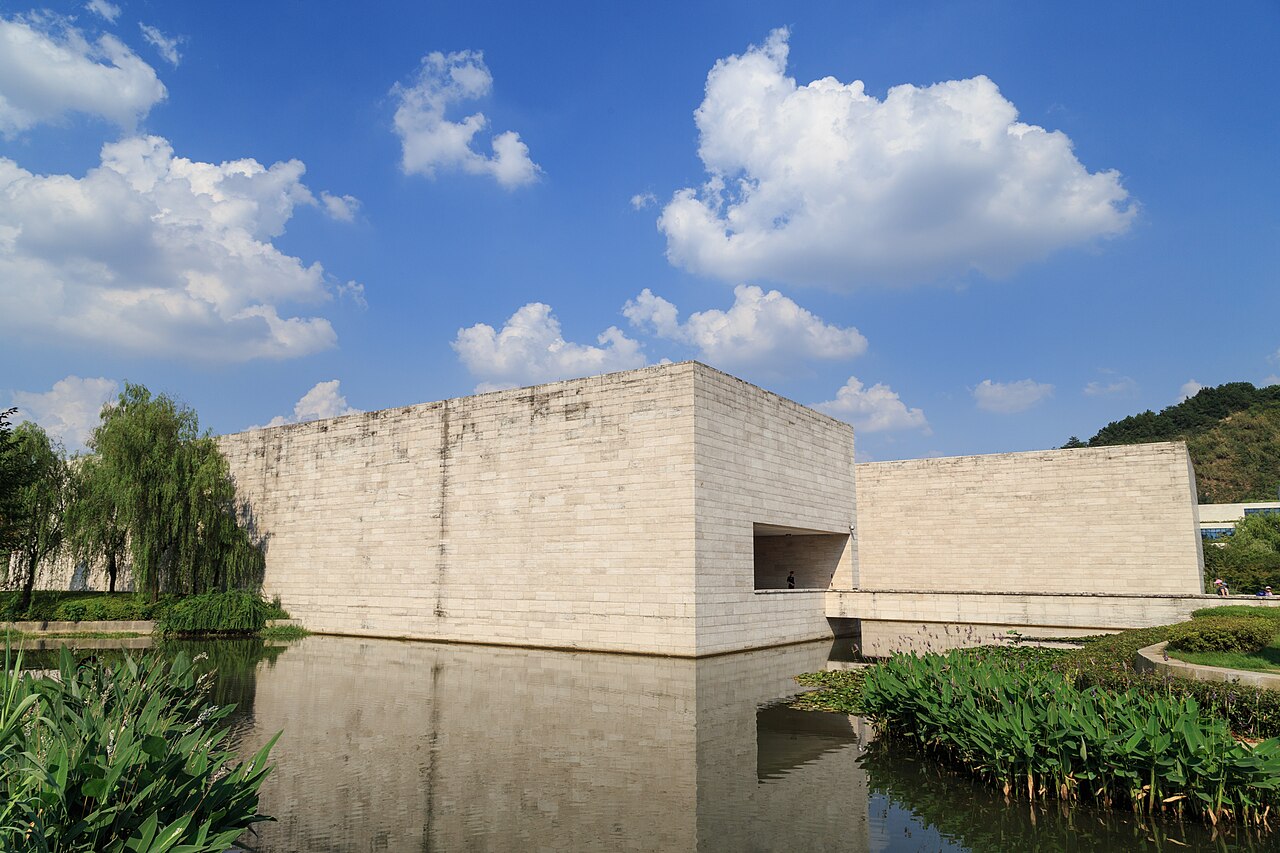
Give a second object a contrasting role, such as a labelled pottery vessel or a find associated with production or everyday activity. That comparison keeps the visit from becoming only a collection of visually impressive jade pieces. Ask whether you are looking at an original, a cast, a reproduction or a reconstruction. Photograph the label for reference only where allowed, then spend a moment looking without the phone. The museum's exterior image is included to identify the actual venue; it does not imply that every photographed interior display is unchanged today.
Enter the park with a named core route
The museum's own published park itinerary provides a useful geographical skeleton: East Gate, East City Wall, Zhishan, Mojiaoshan, Fanshan, West City Wall and West Gate. This is a dated 2021 route, so use it to understand the order of places and ask which sections, gates and internal transport are operating now. It is not a promise that a particular bus follows the same loop today. For a selective first visit, make Mojiaoshan and Fanshan the core, then choose the wall and viewpoint sections that fit the actual route.
At entry, ask staff to identify the stop or path for Mojiaoshan (莫角山), Fanshan (反山) and your intended exit. Check what internal transport includes, where boarding occurs and what time the final return operates. Walking can be rewarding, but a map line across open landscape does not establish a short stroll. Use transport deliberately to protect time at the archaeological subjects, rather than spending most of the afternoon covering connecting ground and then hurrying through the interpretation.
References: 4
Mojiaoshan: understand the platform before imagining the buildings
Mojiaoshan is the raised central palace-area platform in the authority's description of the city. Its construction and placement matter even when the visitor sees grass, paths and low ground forms rather than roofed structures. From a permitted viewpoint, locate the edge and the higher ground identified by the interpretation. Consider the relationship between that raised area and the surrounding city, then use a plan or model to understand what has been archaeologically established. A neatly presented contour should not automatically be described as a fully exposed original wall.
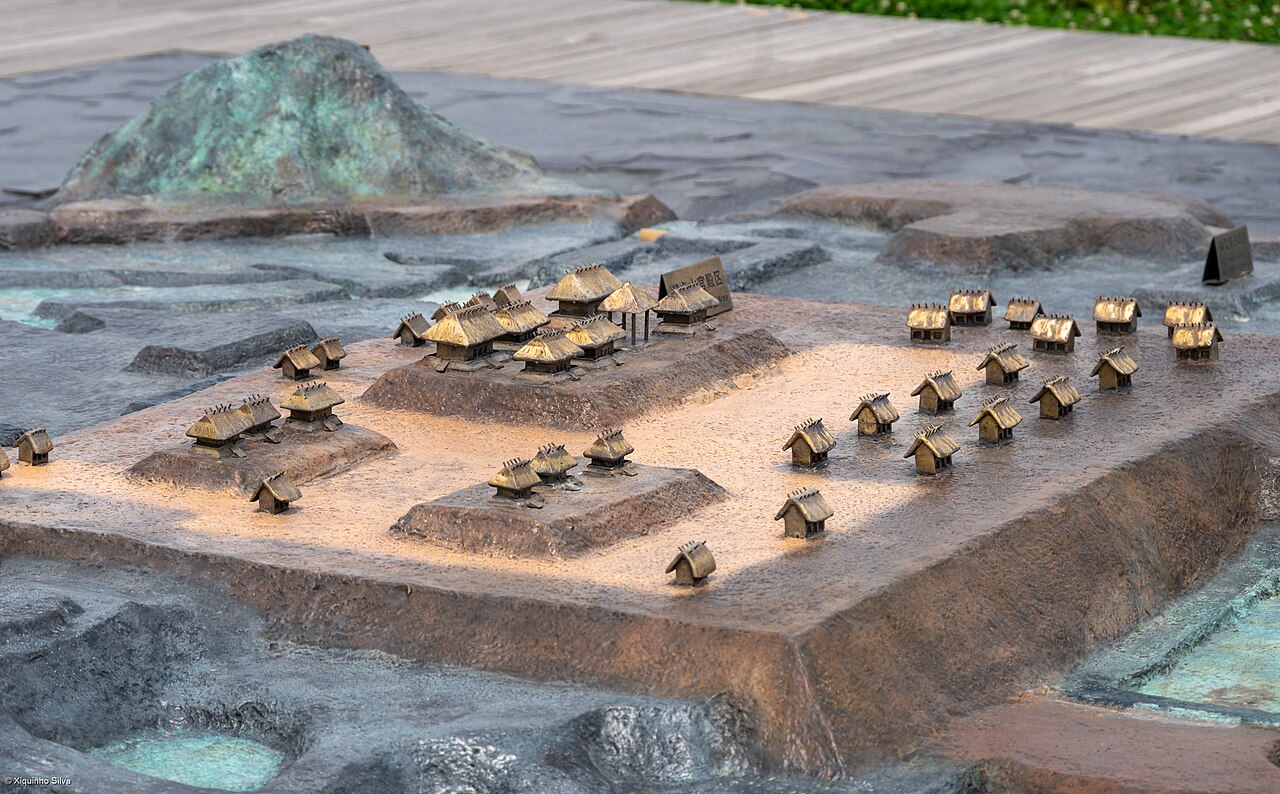
The guide includes a real photograph of a modern interpretive model taken at the Liangzhu site in May 2023. The small roofed structures and colored terrain are part of that model, not surviving prehistoric houses. Compare its broad spatial relationships with the current labels and the landscape, while retaining the distinction between evidence and reconstruction. If an exact room arrangement or roof form is not established by the explanation, leave that detail open. A model is most useful when it clarifies the scale of a question rather than replacing the archaeology with certainty.
Fanshan: follow the burial context into the objects
Continue to the permitted Fanshan viewing and interpretation area. The site's conservation plan identifies it as an important high-status burial ground within the city context. Use the current display to see what is being presented: an excavated location, protected remains, a recreated arrangement or finds shown through other media. These approaches can all teach something, but they are different encounters. Do not expect a series of visitor-accessible chambers simply because a tour description uses the word royal tombs.
Connect this stop with the object labels you read at the museum. The useful link is a documented find and burial context, rather than the claim that a beautiful jade must have come from the exact patch of ground now in front of you. Where a diagram explains the placement of objects, look at relationships within that diagram before collecting object names. If time or weather forces a shorter visit, preserve enough time for this interpreted context and drop a recreational detour instead of reducing Fanshan to a sign photograph.
References: 7
Choose the final landscape stop to explain the city’s boundaries
If the current route permits, finish with a selected wall section or a confirmed Zhishan viewpoint. The dated museum route names both as ways to understand the city spatially. Use the authorized path and look at how the boundary or viewpoint changes your sense of the raised centre. Do not assume every embankment or wet area within sight belongs to the same prehistoric construction phase. The wider World Heritage property includes water-management areas beyond the city-site component; a visit to the park does not mean you have toured every dam.
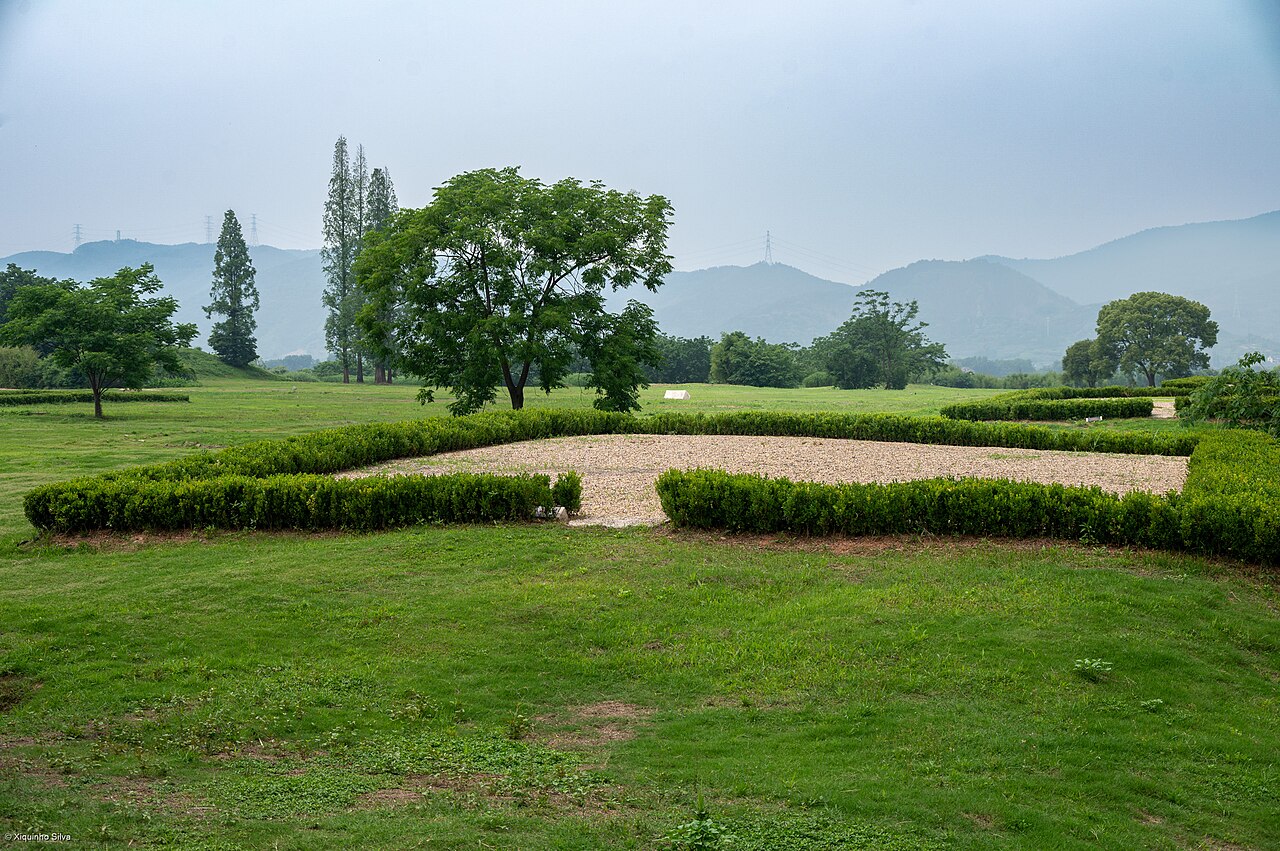
The lead landscape photograph was taken inside the Liangzhu City archaeological site in May 2023. It shows low presented ground, vegetation and distant hills, rather than an imaginary standing palace. Its exact sub-feature is not asserted because the creator's identification does not establish one. That restraint helps set the right expectation: the land becomes meaningful through the named route and interpretation, not through a dramatic skyline. The quieter view is part of the reason to combine the park with the museum.
Keep the day comfortable and adaptable
Carry water, suitable footwear and protection for the forecast, and ask about shade, seating, toilets and an accessible route at the start. Open ground can feel tiring even without a mountain ascent. In heavy rain or heat, shorten the outdoor section and keep the museum as the more detailed interpretation block if it is available. Ask staff about temporary closures rather than following an old map onto an unused path. Keep a firm return margin for your actual journey back into Hangzhou or onward transport.
A worthwhile day leaves you able to connect three things: the raised city centre, a documented burial context and the objects used to interpret social life. The museum provides close detail; the park supplies relationships and scale. You do not have to finish every viewpoint, interactive activity and recreational area to make that connection. When choosing what to remove, keep the two or three archaeological subjects that answer your original question and let the rest remain a reason for another visit.
A museum-and-landscape day
Protect about two hours for the museum, a separate transfer and meal break, and roughly three hours for a selective park visit with confirmed internal transport or a manageable walk. These are editorial allowances, not measured walking or queue times. Reverse the order for your confirmed booking and weather, but avoid arriving at the museum close to its published entry cutoff.
Questions
Is the museum inside the same ticketed park route?
Plan them as separate named venues with their own current admission procedures and a transfer. Verify any genuinely available combined arrangement rather than assuming one booking covers both.
Does the model photograph show actual surviving houses?
No. It is a real photograph of a modern interpretive model at the site. The tiny roofed buildings are reconstruction, while the park landscape and museum exterior photographs depict their actual present-day physical settings on the dates stated.
Sources and photography
- UNESCO: Archaeological Ruins of Liangzhu City
- Liangzhu Museum: official visitor guidance, September 2025
- Zhangzhugang: Liangzhu Museum southwest entrance
- Liangzhu Museum: official park route, November 2021
- Liangzhu heritage authority: Mojiaoshan palace-area interpretation
- xiquinhosilva: photograph of a Liangzhu interpretive model
- Liangzhu site conservation plan, authority-hosted original
- xiquinhosilva: Liangzhu archaeological-site landscape
Photographs are credited beside each image. Their recorded capture dates describe the images; check the current visitor or product information linked above when planning.