Longmen: alternate between the niche and the cliff
A very large sculpture and a small niche demand different kinds of attention. At Longmen, make changing scale the organizing principle of the visit. Alternate a wider look at the carved setting with a closer look at one permitted detail, so that neither monumental size nor intricate repetition overwhelms the whole experience.
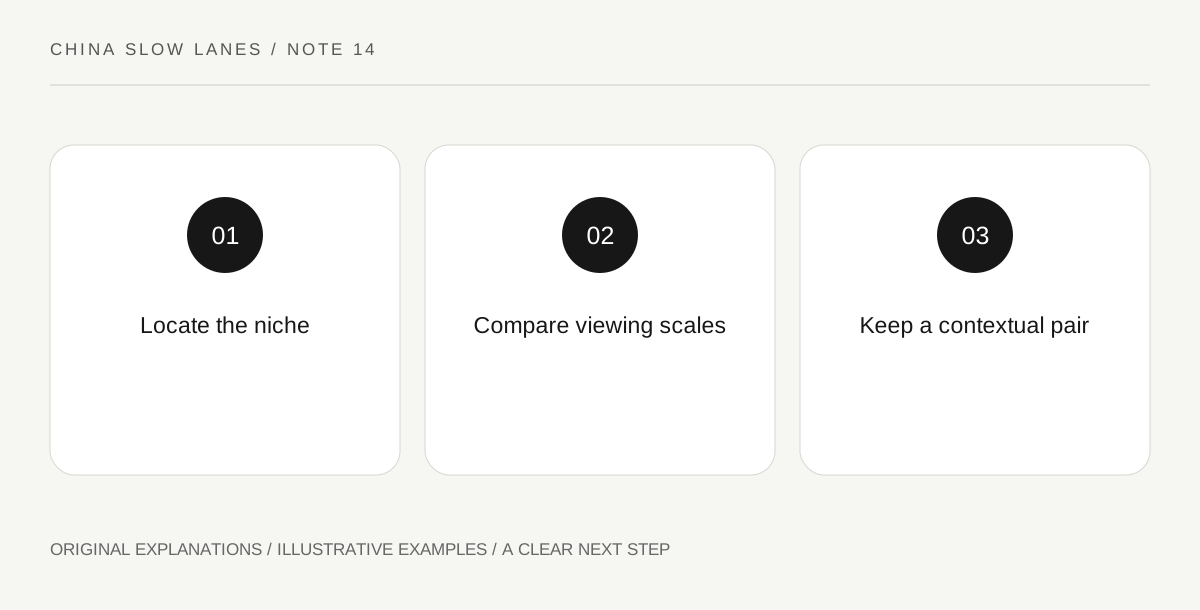
Original explanatory diagram. Read the full method and limitations below.
Begin with the carved setting
UNESCO identifies Longmen’s grottoes and niches as a major body of Buddhist stone art associated with the Northern Wei and Tang periods. Before concentrating on an individual figure, take in the visible relationship between openings, carved surfaces and the cliff. Record only what is apparent from the authorized route. The broader view helps locate a niche within an ensemble and prevents a famous figure from becoming, in memory, an isolated museum object detached from the place in which it was carved.
Choose one scale comparison
Find two accessible views that allow a comparison between a larger arrangement and a smaller one, using the site’s actual interpretation to identify them. Ask how much of the figure or group you can perceive at once and which details require closer attention. Do not assume that size alone establishes importance, date or patronage. Those are historical questions for the evidence. Your field question is simpler: how does scale change the visitor’s experience of looking? The answer can be specific even when the historical background is still being learned.
Treat gaps as part of the record
Carved heritage can contain surfaces or forms that are incomplete, altered or difficult to interpret. Describe a visible absence without inventing its cause. If the panel supplies an explanation, attribute it; if not, leave the cause open. Avoid retouching a photograph in ways that erase the condition you were trying to understand. A sketch can use a broken outline to show an uncertain boundary. This preserves the difference between what survives and what you imagine might once have been there, which is essential to a thoughtful archaeological encounter.
End with a contextual pair
Select a wider record and a detail that explain one another, where photography is permitted. Include the component or niche name from the site information and a sentence about why the detail matters to the larger view. If photography is restricted, a written pair works just as well: one sentence about setting, one about form. Keep the final selection small. The aim is a coherent memory of a particular encounter, not a complete digital inventory of a major body of art that could occupy many visits and years of study.
Illustrative field exercise
Illustrative record: a traveler chooses an interpreted niche and first draws its position among neighboring carved areas. Their detail note concerns a visible gesture, while a broken edge is marked without a causal claim. A wider photograph and a permitted closer photograph become one paired entry. The caption names the niche and explains the scale change, leaving historical attribution to the panel they recorded.
Questions that come up
Is a larger figure automatically the most historically important?
Size alone cannot establish that. Historical significance depends on context, date, patronage and interpretation, which require information beyond a visual comparison.
What if I cannot get close enough to see a chosen detail?
Choose another visible feature or use authorized interpretation images. Do not cross a barrier or obstruct others to satisfy a notebook plan.
References and scope
These sources support the factual background. Examples and exercises are original illustrative teaching material. References do not imply endorsement.
- UNESCO: Longmen Grottoes — The Buddhist grotto-and-niche ensemble and its Northern Wei and Tang artistic context.