Sacred landscapes7 min read
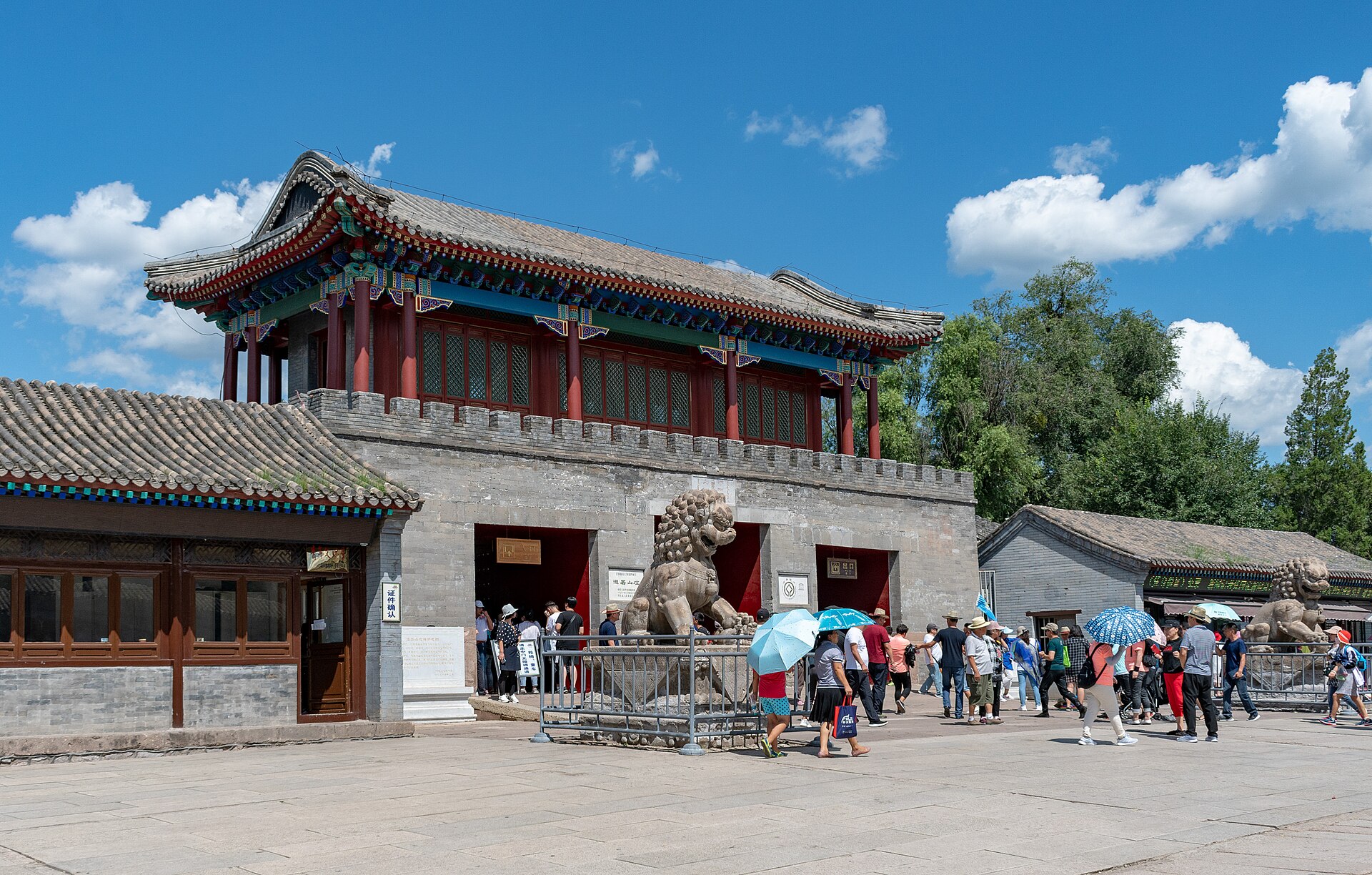
Chengde rewards a day organized around three different experiences: the formal palace area, a slower walk through the lake gardens, and, if time permits, one outlying temple. Begin at the Mountain Resort rather than trying to collect every temple. This guide gives you a named sequence, practical decision points and three real photographs of the places involved.
Read the guide ↗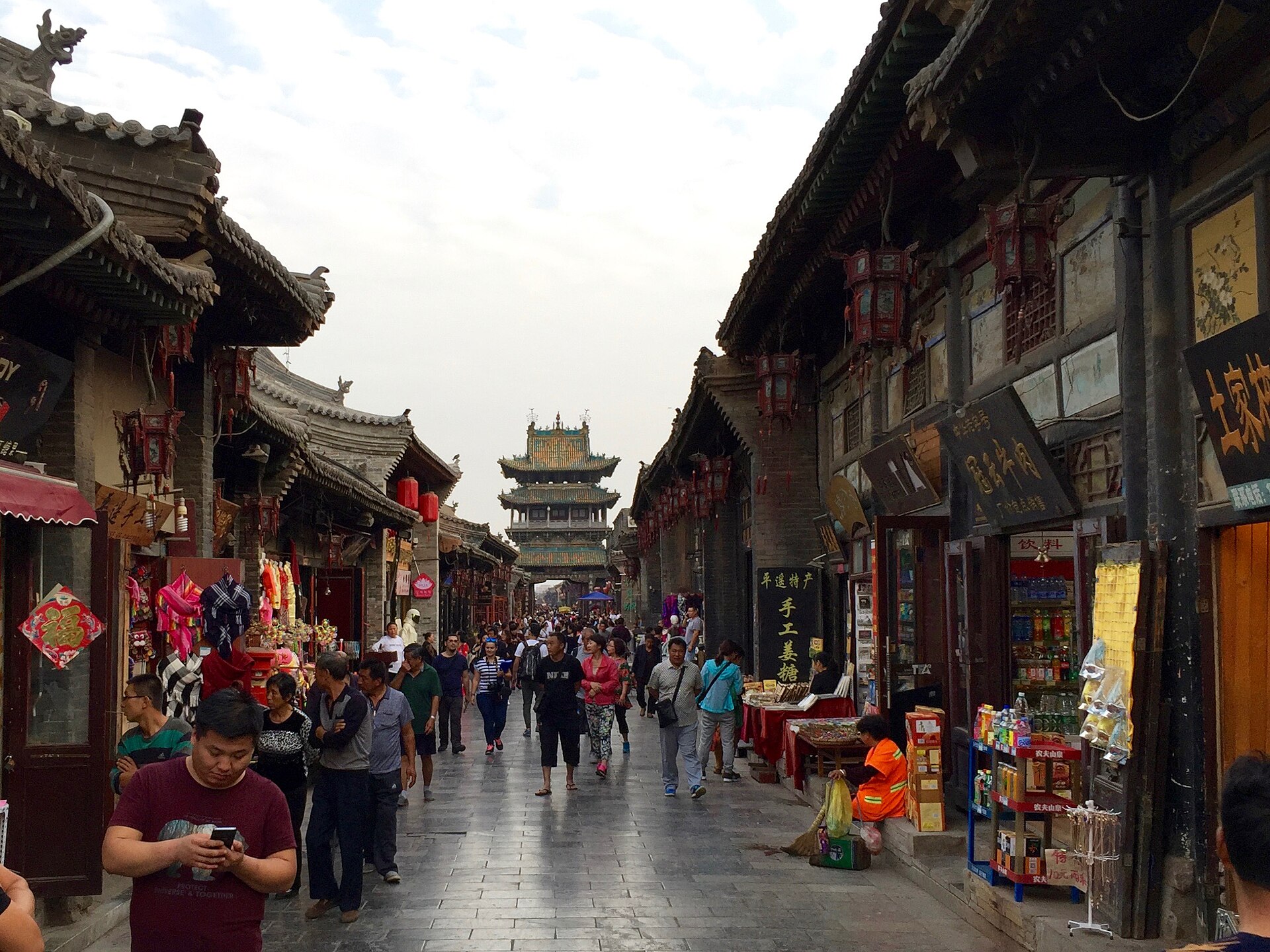
Town and village7 min read
Use a half-day in Pingyao to connect a busy commercial street with the deeper spaces of a former remittance bank. The useful sequence is South Street, the City Tower area, West Street and a properly interpreted visit to Rishengchang. Three real photographs show the street and the bank's courtyards, so you can see the difference before arriving.
Read the guide ↗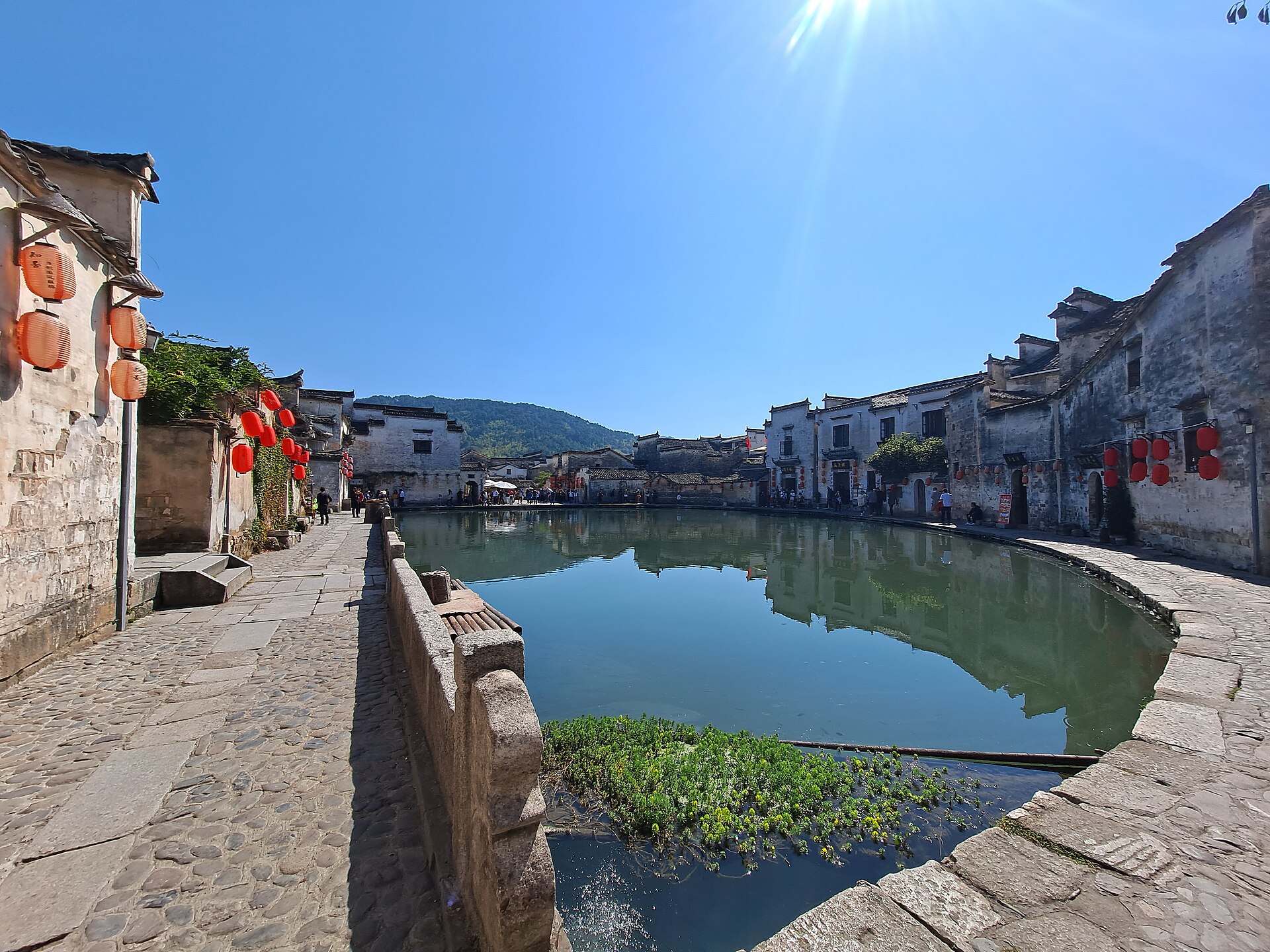
Town and village8 min read
Choose a clear walk in each of Anhui’s two UNESCO villages: South Lake to Moon Pond in Hongcun, then the Hu Wenguang archway and an interpreted house in Xidi. This guide explains when to choose just one, how to arrange the middle transfer, and what to look for beyond their shared white walls and dark roofs.
Read the guide ↗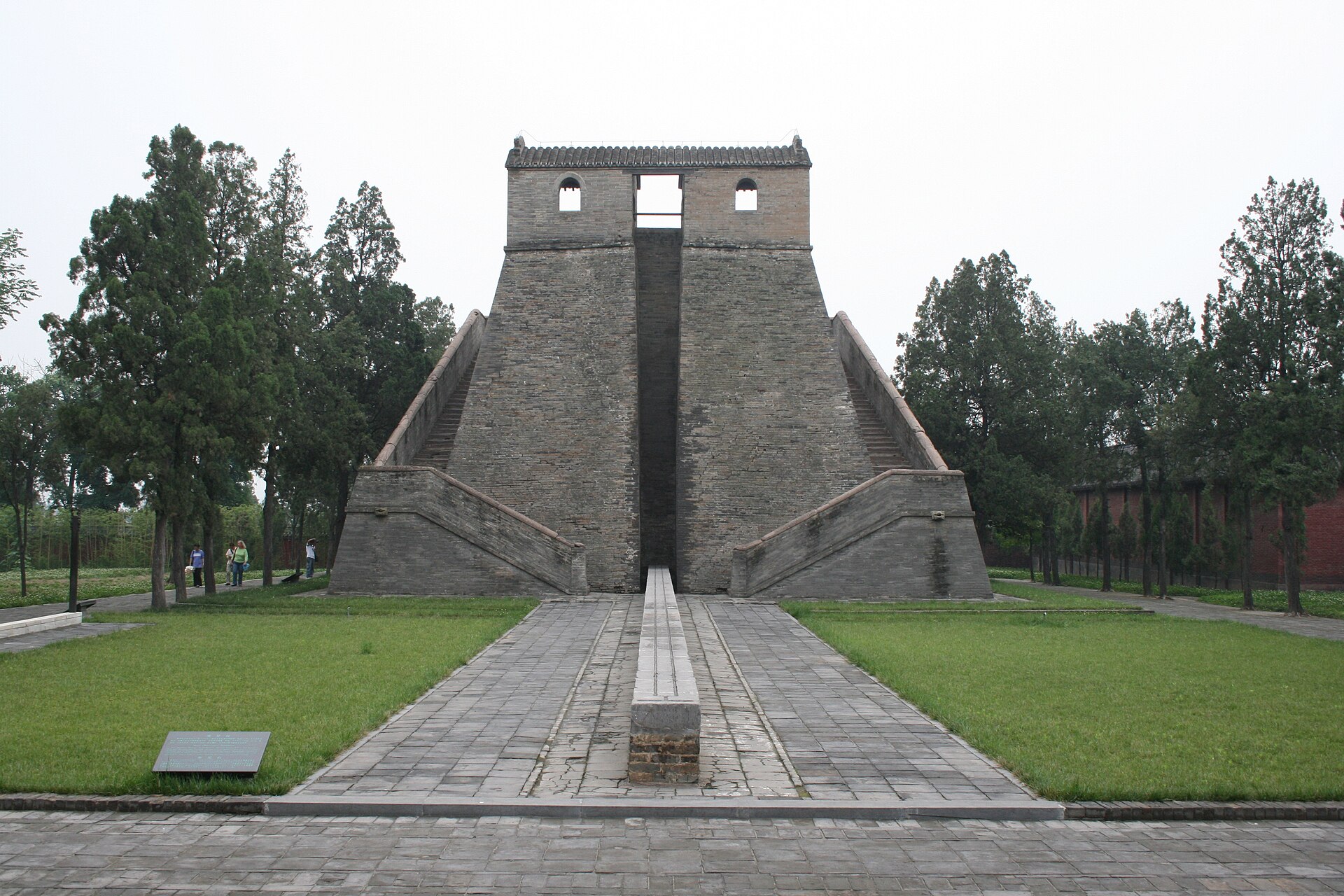
Sacred landscapes8 min read
Pair an extraordinary surviving astronomical structure with a temple organized around a long sacred approach. This selective Dengfeng day explains what to see at Gaocheng, how the shadow-measuring apparatus differs from a modern observatory, and how to follow Zhongyue’s gates and courts without trying to collect every UNESCO component.
Read the guide ↗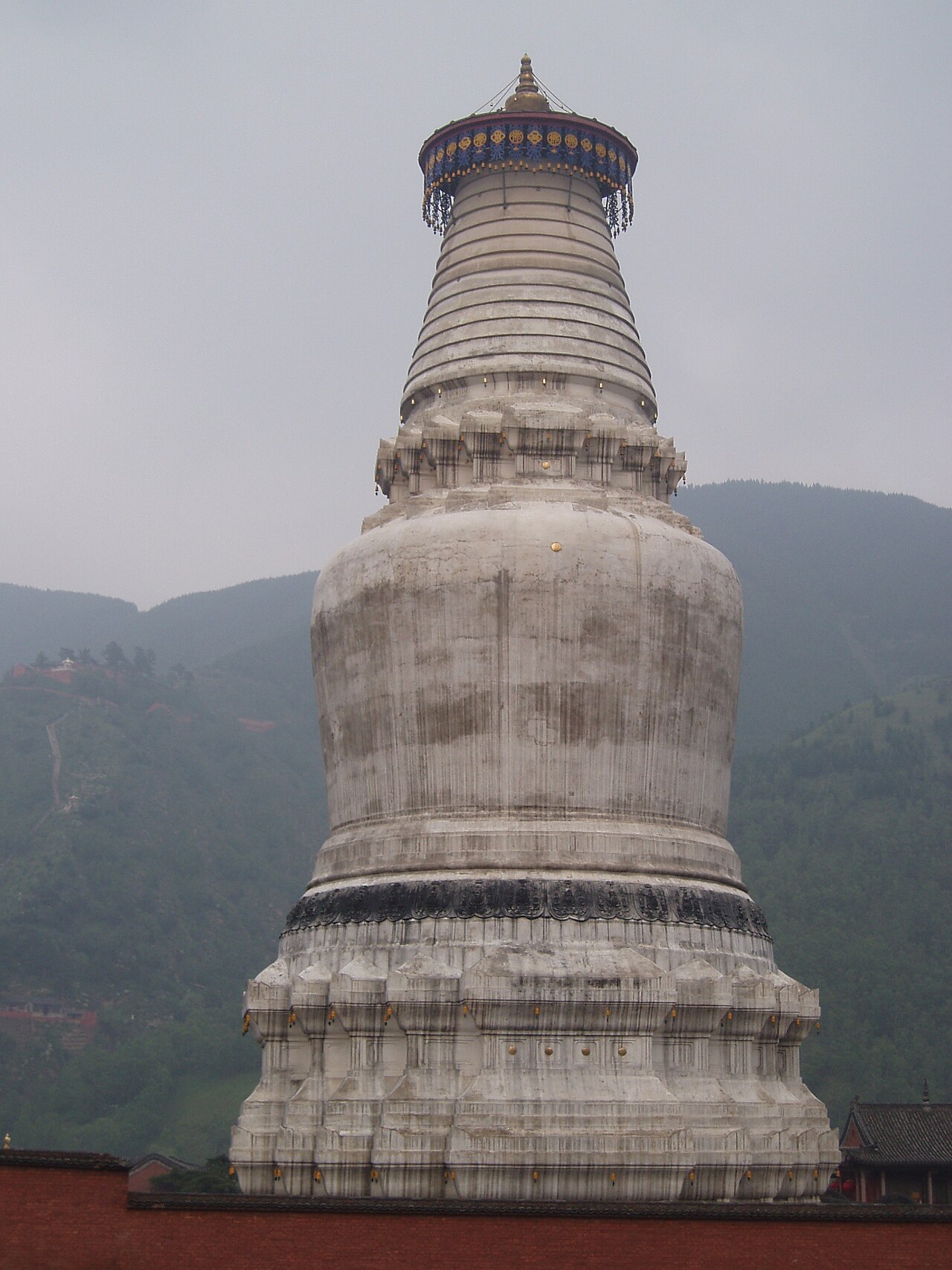
Sacred landscapes8 min read
Follow a focused Taihuai temple walk from Tayuan to Xiantong, then decide whether Foguang’s Tang-period East Main Hall deserves a separate day. Exact-place photographs show Tayuan’s White Pagoda, Foguang’s raised approach and the hall’s timber brackets, helping you plan a visit around real buildings rather than an undifferentiated mountain checklist.
Read the guide ↗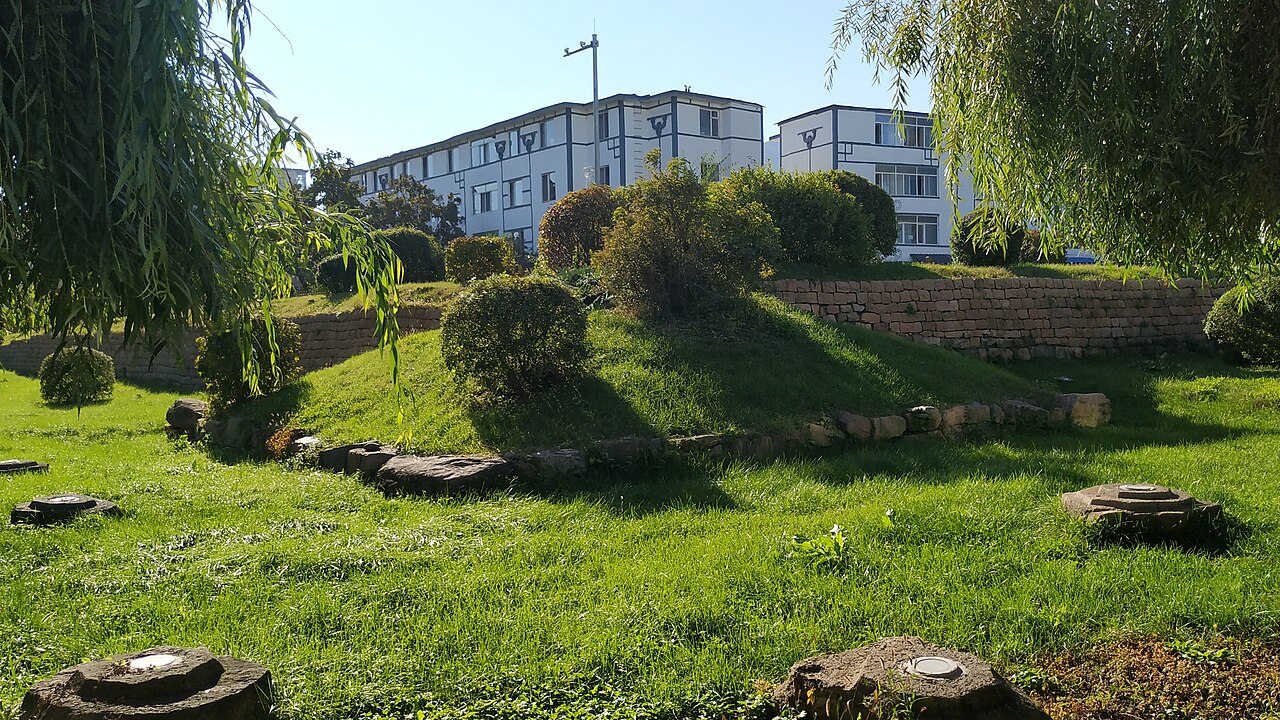
Archaeology8 min read
Build a coherent Ji’an heritage day around an interpreted museum start, a selected Guonei wall section and the separately reached Wandu Mountain City. Exact-place photographs show the difference between low remains within the modern town and masonry against a mountain backdrop, with practical choices for adding a stele or tomb visit.
Read the guide ↗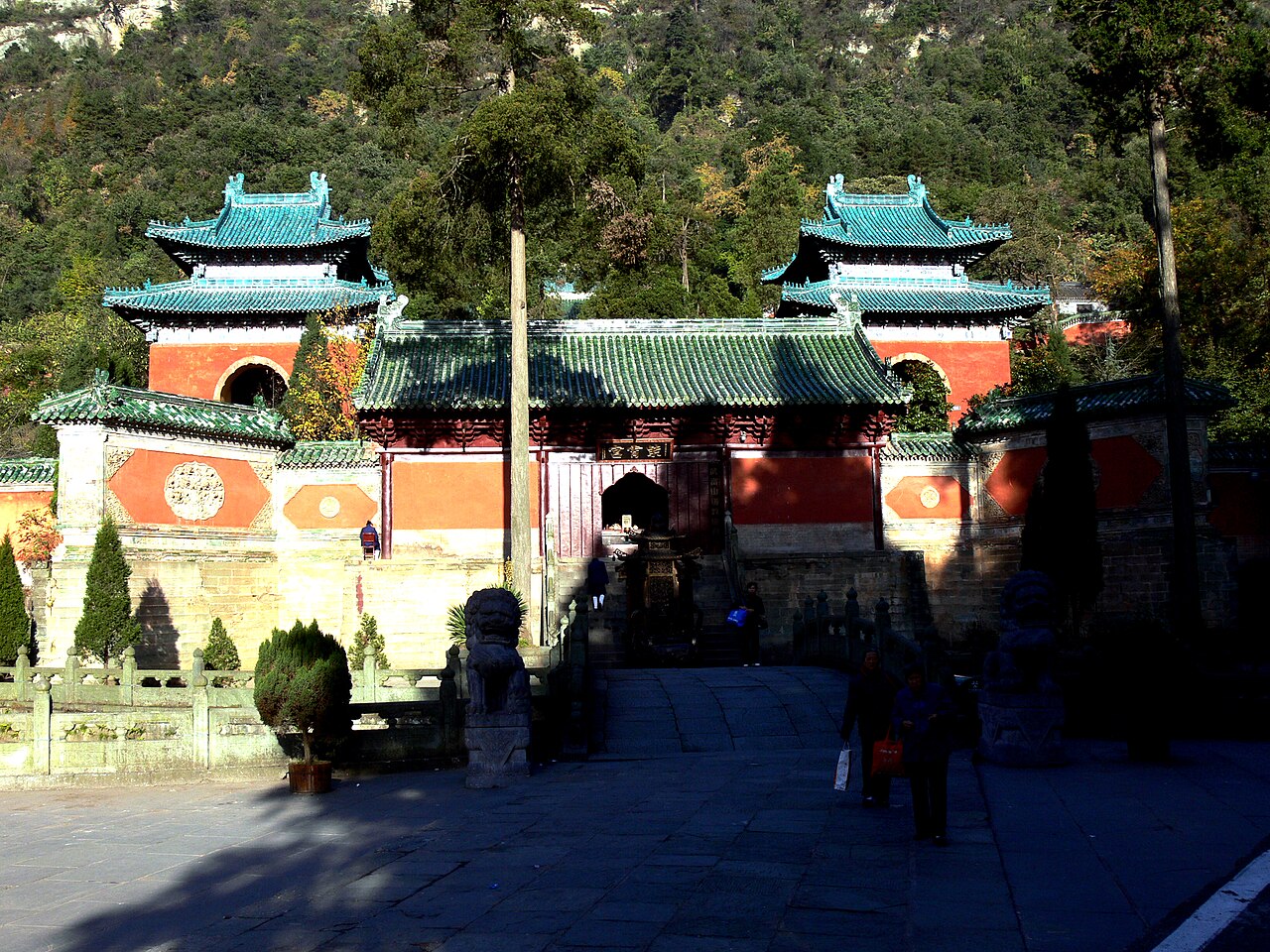
Sacred landscapes7 min read
Plan a day around three distinctive architectural encounters: Taizipo’s curving approach, Zixiao’s elevated courts and Nanyan’s cliffside setting. Exact-place photographs and named stops show how buildings meet mountain ground, while the transport plan keeps a Golden Summit excursion a separate, deliberate choice.
Read the guide ↗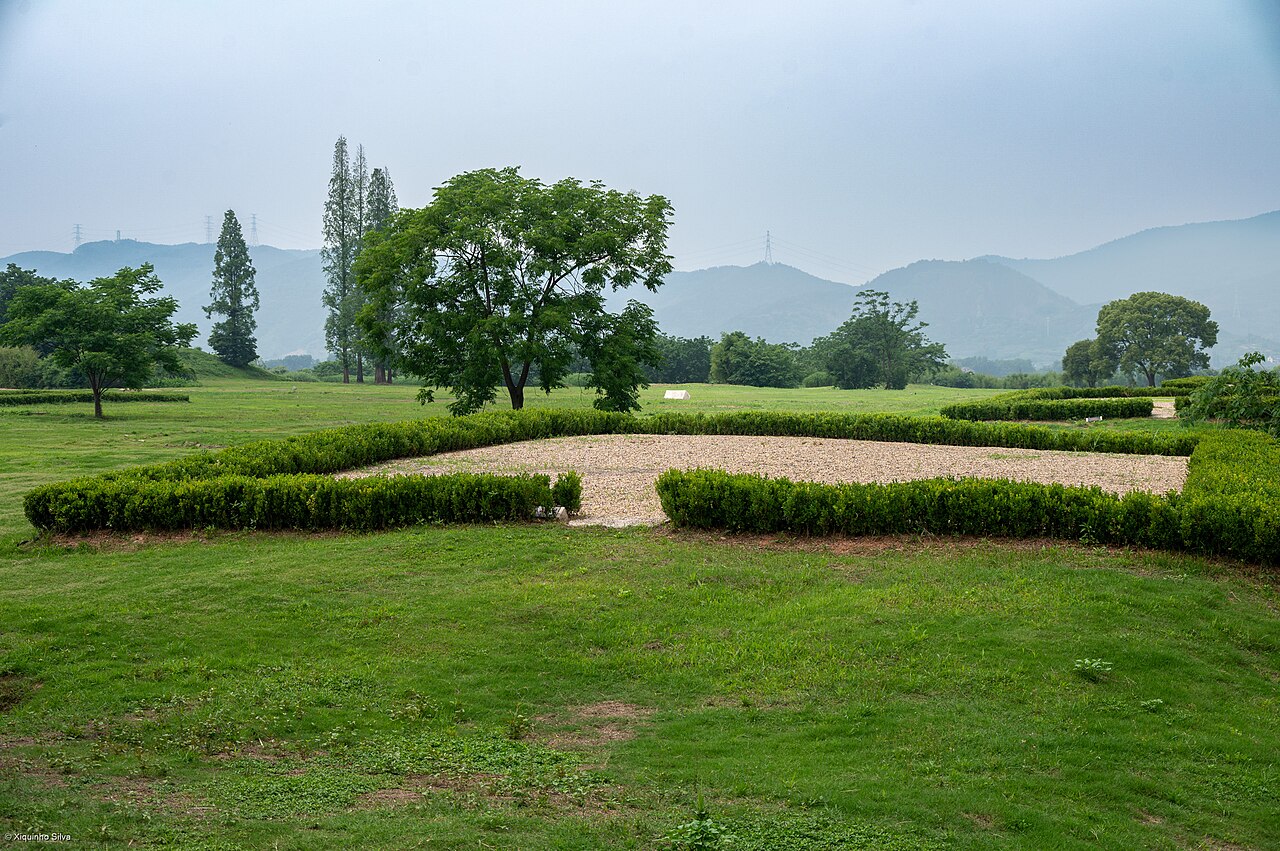
Archaeology8 min read
Combine Liangzhu Museum with a selective archaeological-park visit to Mojiaoshan and Fanshan. This guide explains the separate venues, a workable route skeleton, the relationship between low remains and excavated objects, and how to use an interpretive model without confusing it with the prehistoric city itself.
Read the guide ↗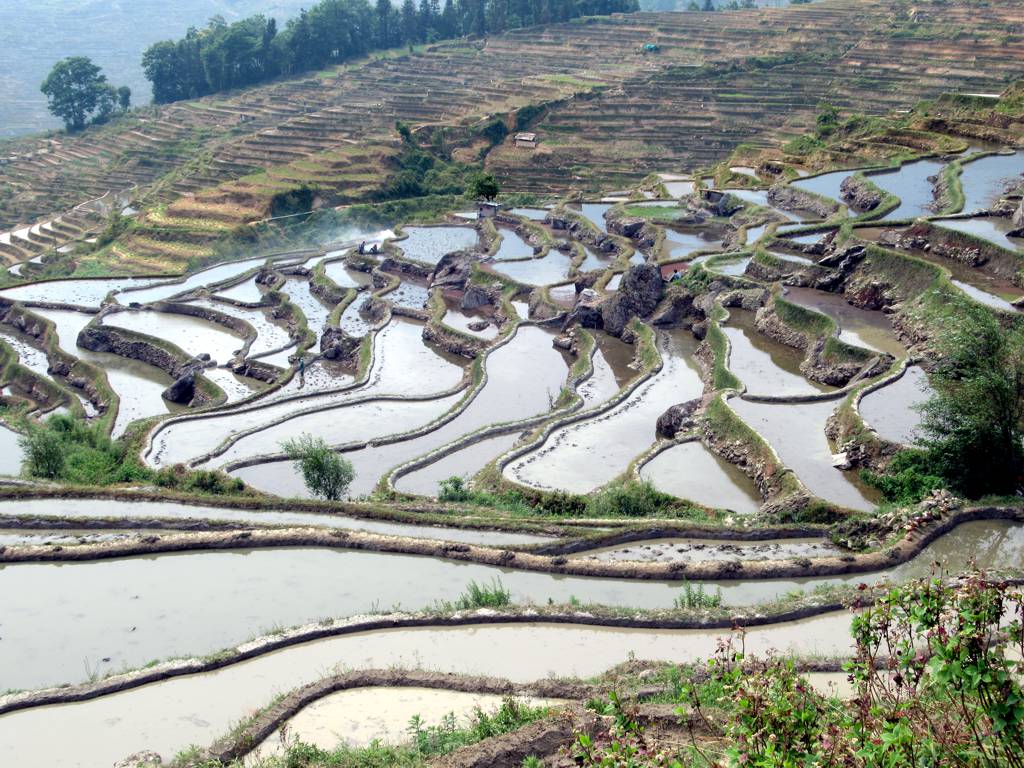
Living environments7 min read
Pair two named terrace viewpoints with a village visit that explains the living landscape. This Yuanyang guide covers the agricultural season, predawn transport, the Azheke community context and a relaxed Bada finish, using real photographs of the exact places rather than unrelated rice-field stock.
Read the guide ↗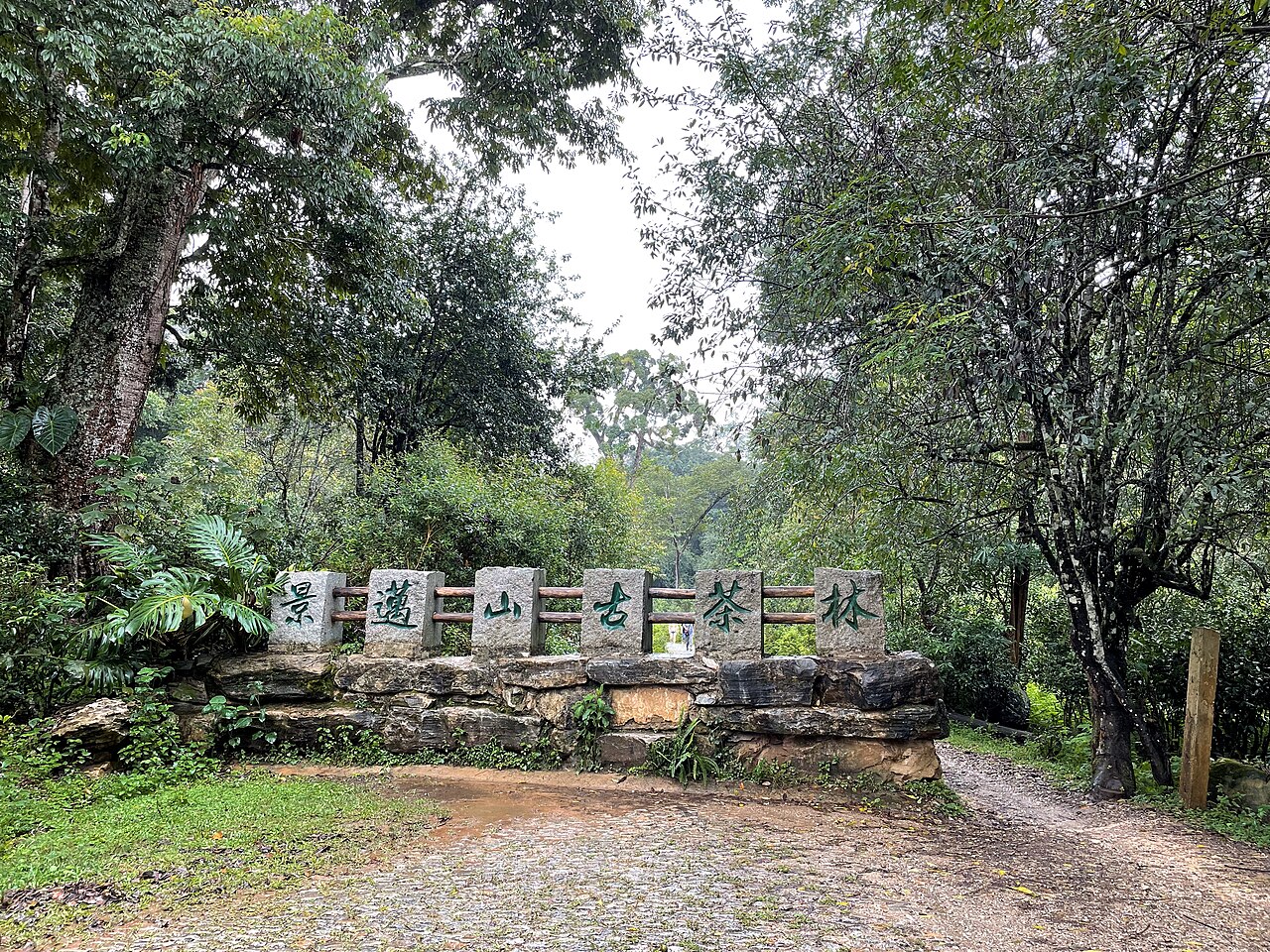
Living environments8 min read
Give Jingmai a day that connects an authorized forest walk with an inhabited village and a specific tea conversation. The core pairing is Dapingzhang Old Tea Forest and Wengji, with practical arrival questions, realistic activity expectations and exact-place photographs that do not confuse temples with tea cultivation.
Read the guide ↗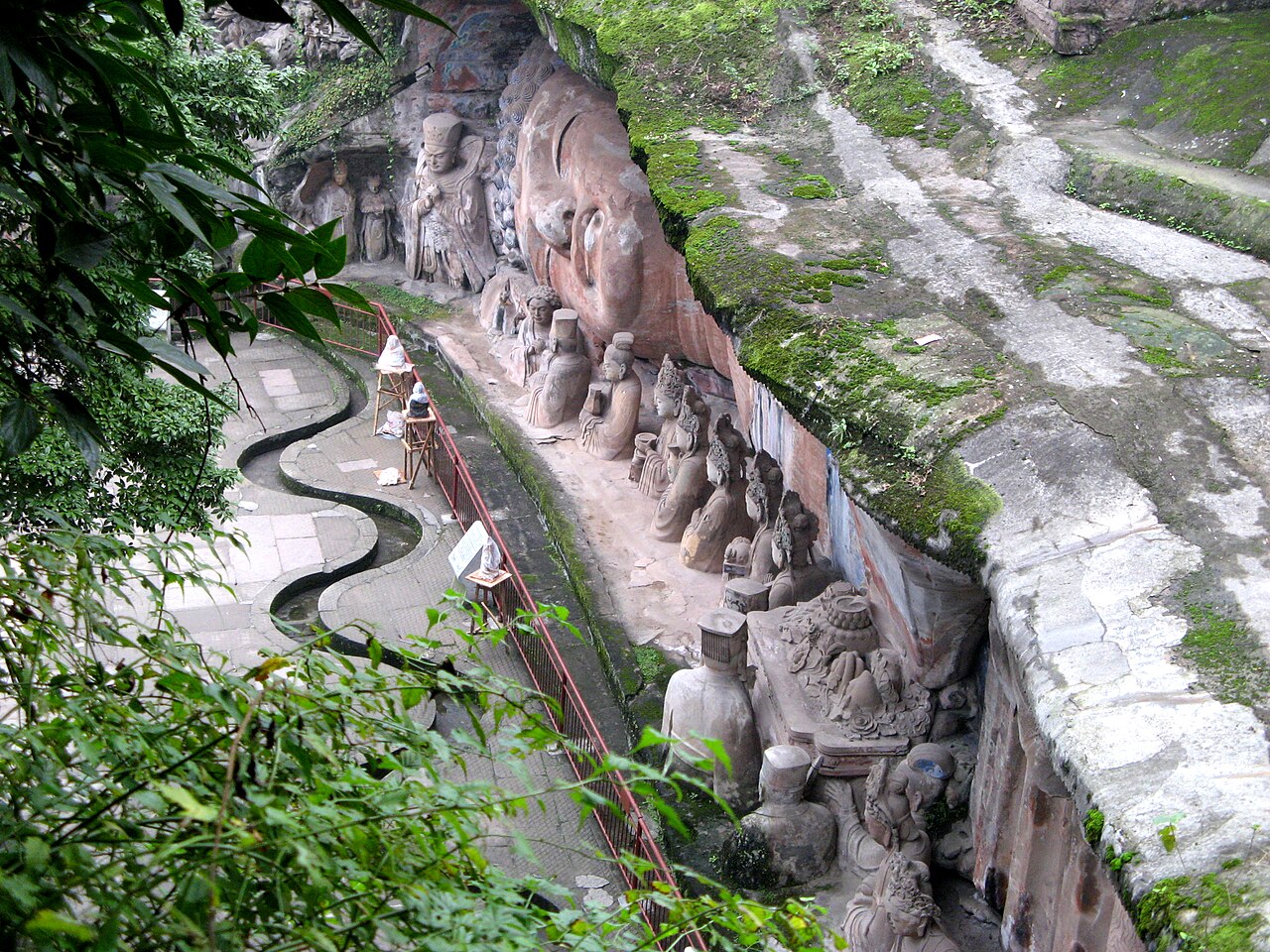
Sacred landscapes7 min read
Use Baodingshan as the main visit, then add Beishan only when it receives proper time. This guide gives the current visitor-centre and ticket distinctions, a practical way to approach the reclining Buddha and detailed reliefs, and exact-site photographs that keep the two carving locations separate.
Read the guide ↗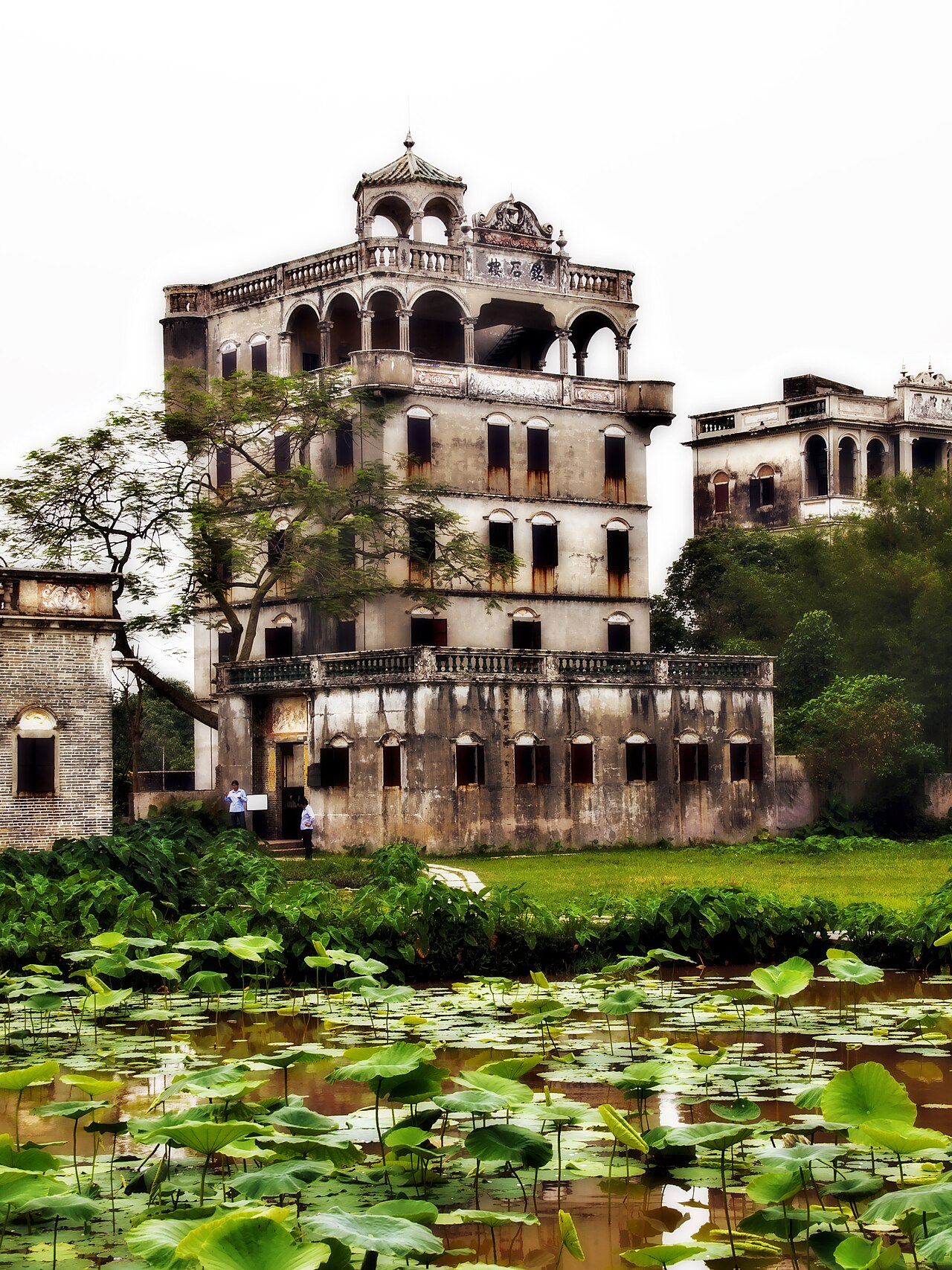
Town and village7 min read
Give the diaolou a setting and a specific history. Start at Zili with Mingshi Lou, one permitted interior and a Yunhuan Lou comparison, then continue separately to Majianglong to see towers among houses and vegetation. The photographs identify the real buildings and village rather than recycling one tower under several names.
Read the guide ↗
Town and village3 min read
An island with varied architecture is easier to remember through a few repeatable observations than a long sequence of mansion names. On Kulangsu, collect a small vocabulary of entrances, openings, balconies and rooflines from public routes. The goal is to notice combinations while leaving historical attribution to documented interpretation.
Read the guide ↗
Sacred landscapes3 min read
A very large sculpture and a small niche demand different kinds of attention. At Longmen, make changing scale the organizing principle of the visit. Alternate a wider look at the carved setting with a closer look at one permitted detail, so that neither monumental size nor intricate repetition overwhelms the whole experience.
Read the guide ↗
Town and village3 min read
One heritage title joins three kinds of place at Qufu, but their purposes are not interchangeable. A temple, a family residence and a cemetery invite different questions about commemoration, household life and ancestry. Use that distinction to choose a manageable visit and build a clearer memory of the components you encounter.
Read the guide ↗
Sacred landscapes3 min read
Recognizable geometry can make the Temple of Heaven seem easy to understand from a single photograph. A slower exercise begins with shapes and their arrangement, then asks what interpretation says they mean. This order allows symbolic learning to grow from careful observation while avoiding the temptation to assign a meaning to every visible number or curve.
Read the guide ↗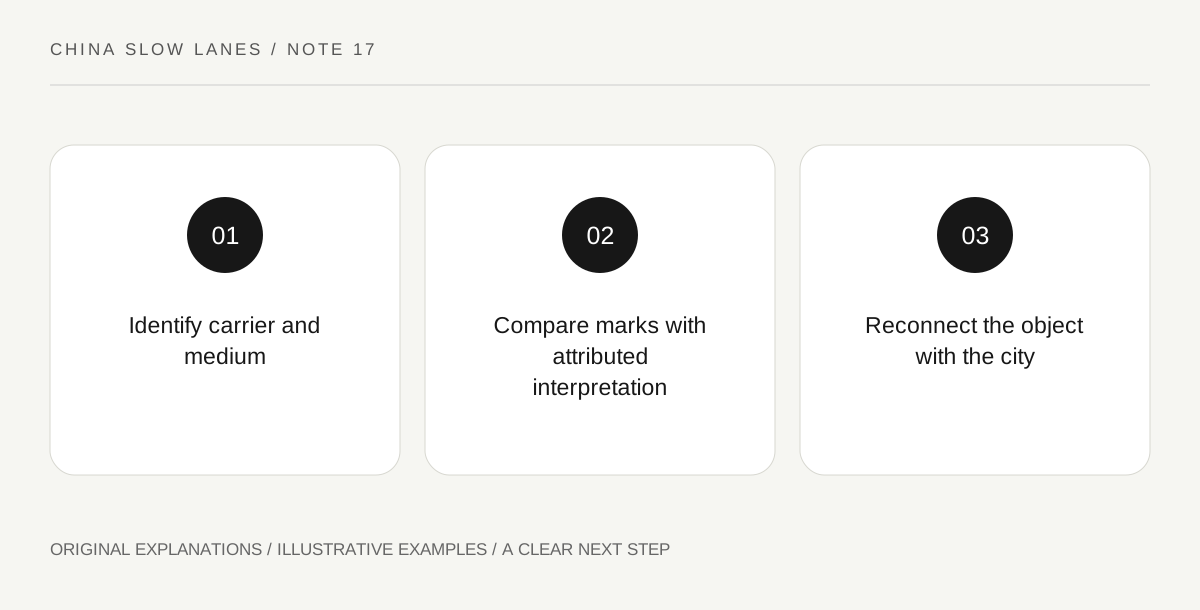
Archaeology3 min read
Ancient writing can be treated as a row of mysterious signs or as evidence embedded in a physical object. At Yin Xu, follow the second route. Look at material, mark and archaeological context in separate stages, using interpretation to connect them rather than expecting a familiar-looking sign to explain itself.
Read the guide ↗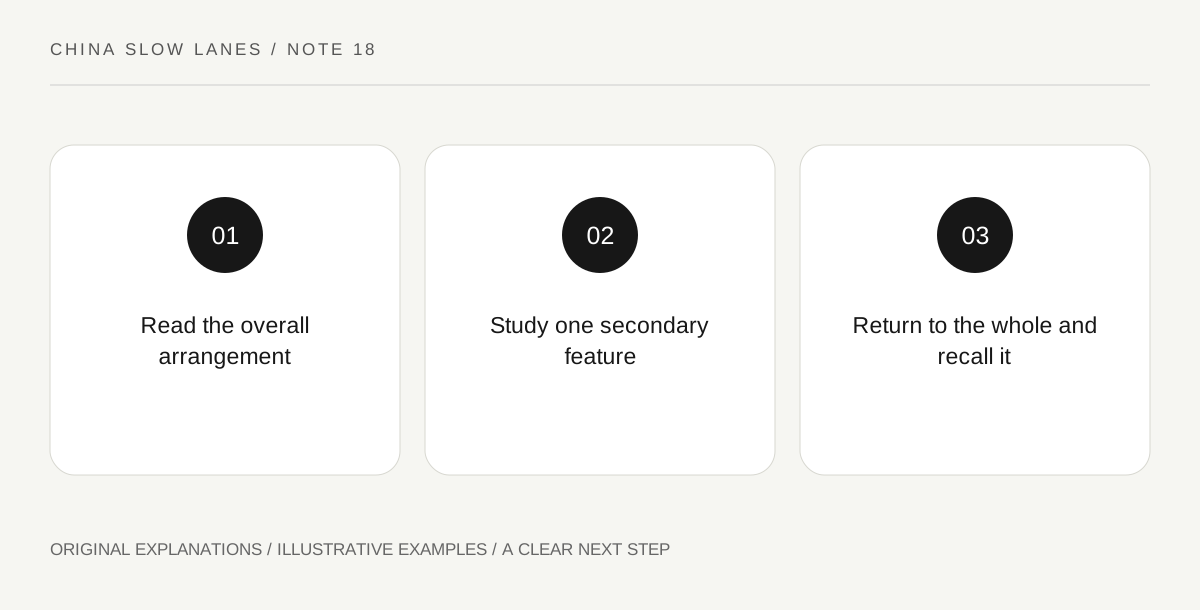
Sacred landscapes3 min read
A richly carved cave can offer more detail than a first visit can absorb. At Yungang, use a short looking score: overall space, main arrangement, one secondary feature and a final return to the whole. The sequence is a practical aid to attention, not a claim that every cave follows the same design.
Read the guide ↗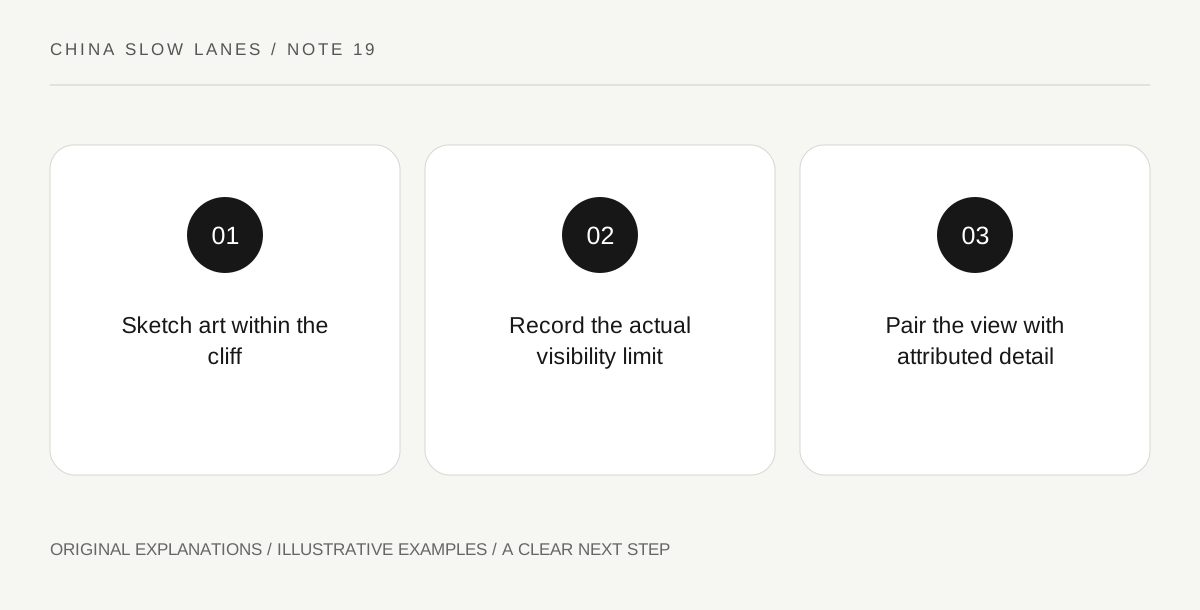
Living environments3 min read
Rock art does not always invite close inspection. A distant authorized view may reveal its relationship with cliff, river and surrounding land more clearly than an imagined close-up. At Zuojiang Huashan, treat distance as an interpretive question and build a visit around what a landscape view can honestly show.
Read the guide ↗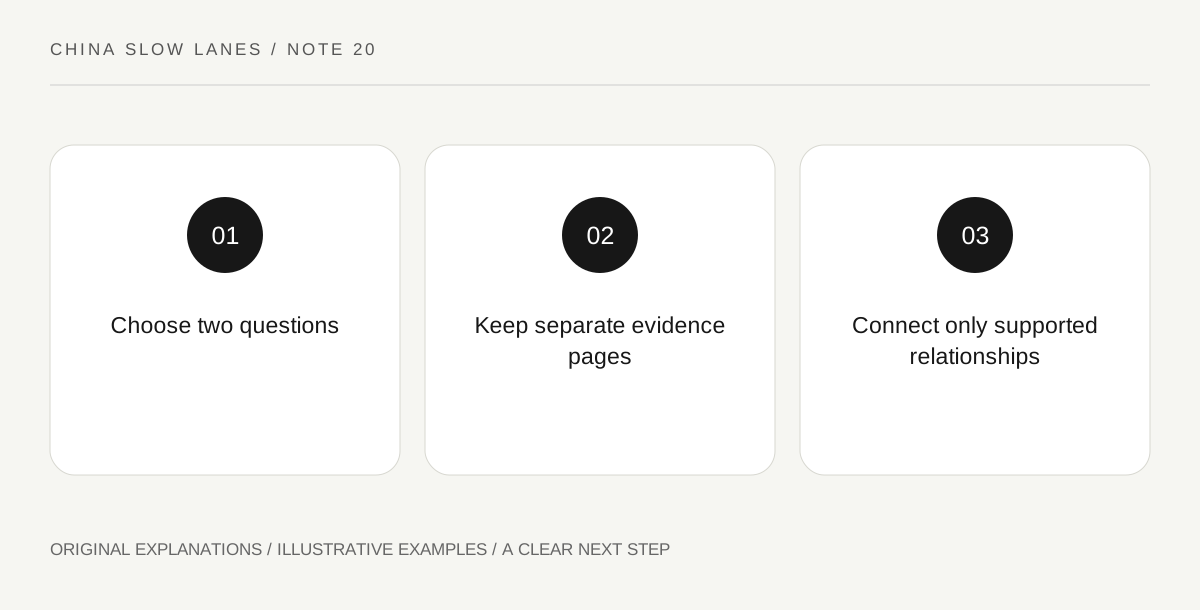
Living environments3 min read
A place described through both natural and cultural significance can be flattened into scenery with a few historical labels attached. At Wuyi, use two parallel pages: one for landscape and habitat questions, another for human institutions and ideas. Bringing them together creates a richer visit without assuming that every component lies on one convenient route.
Read the guide ↗